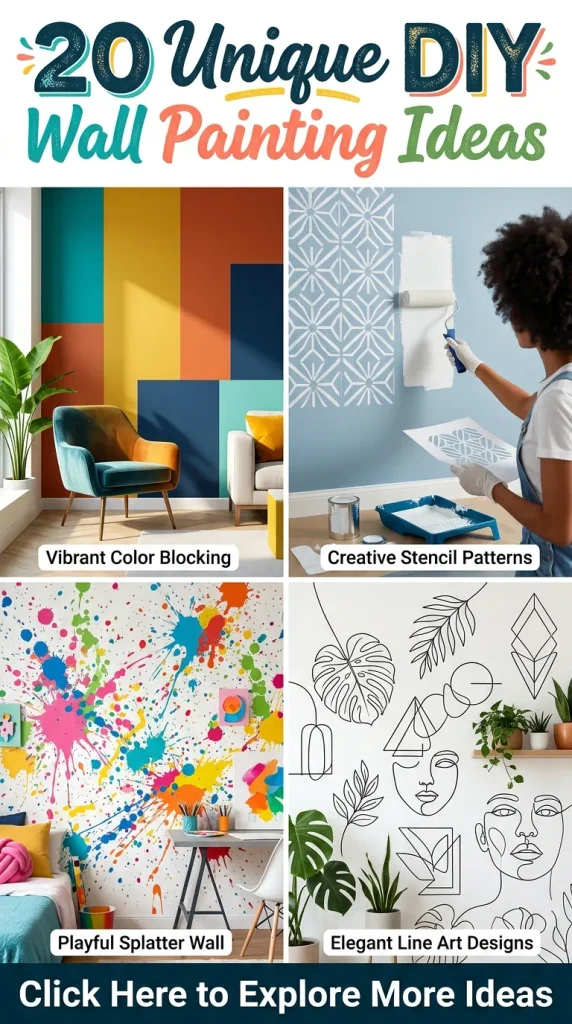
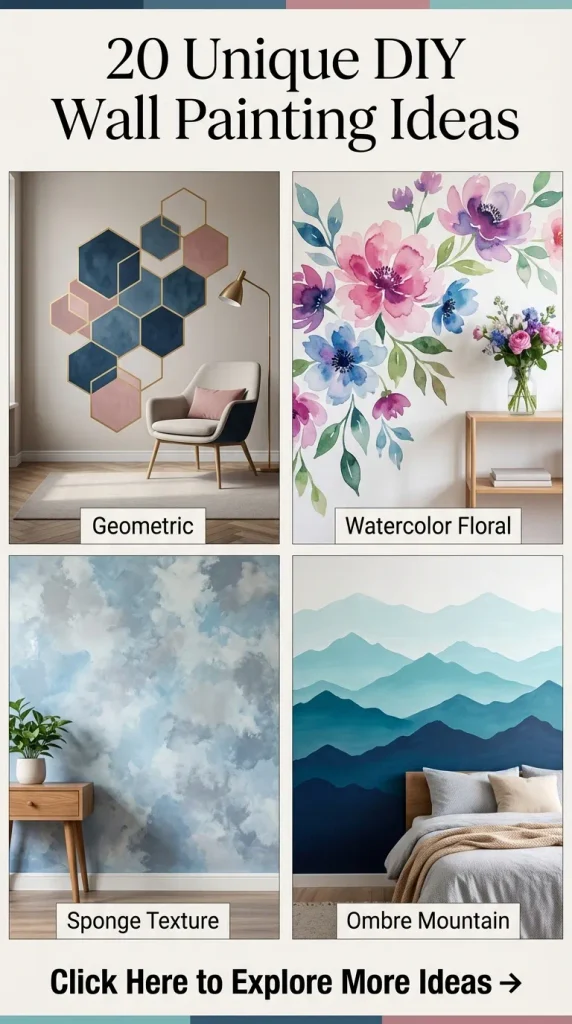
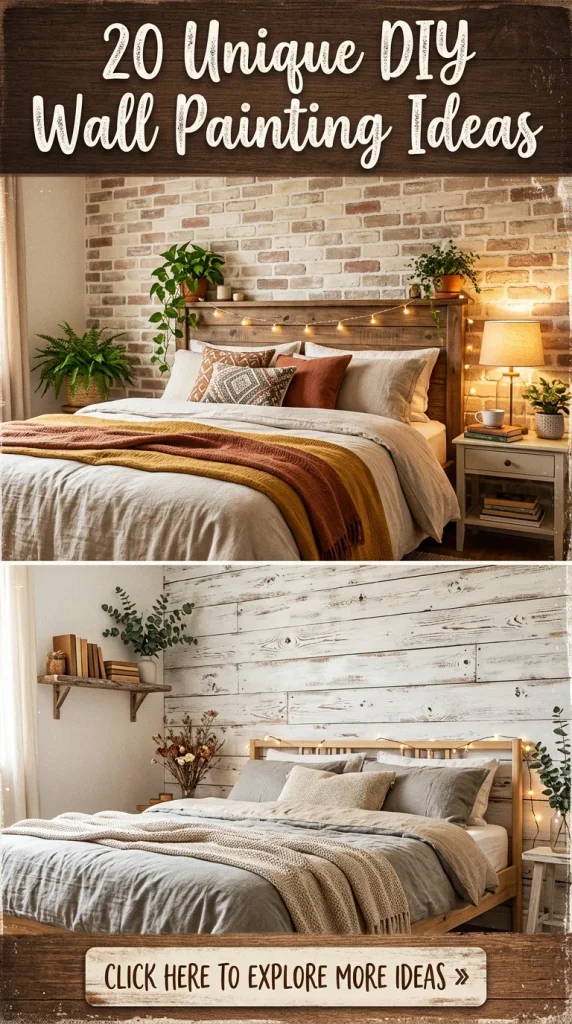
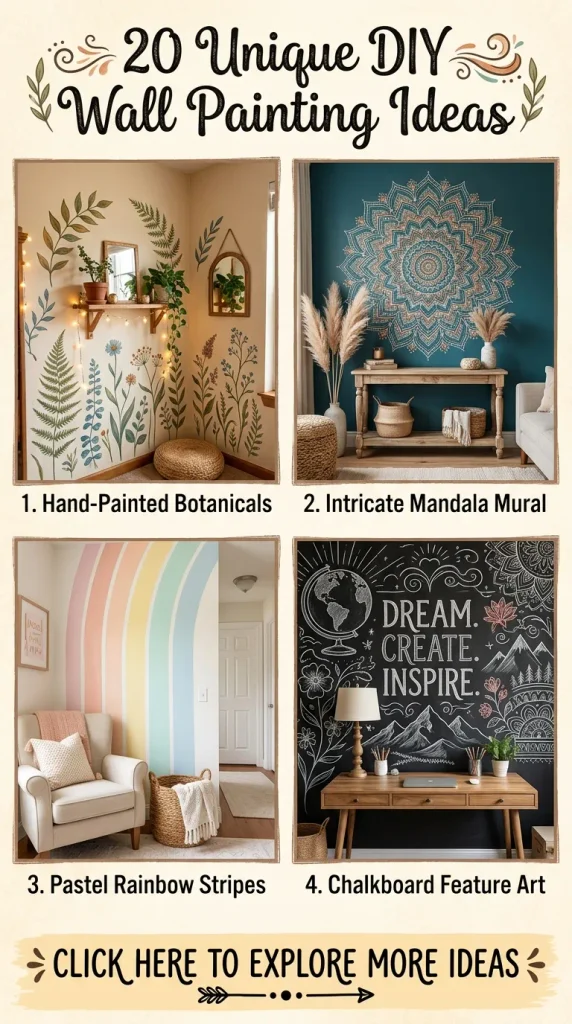
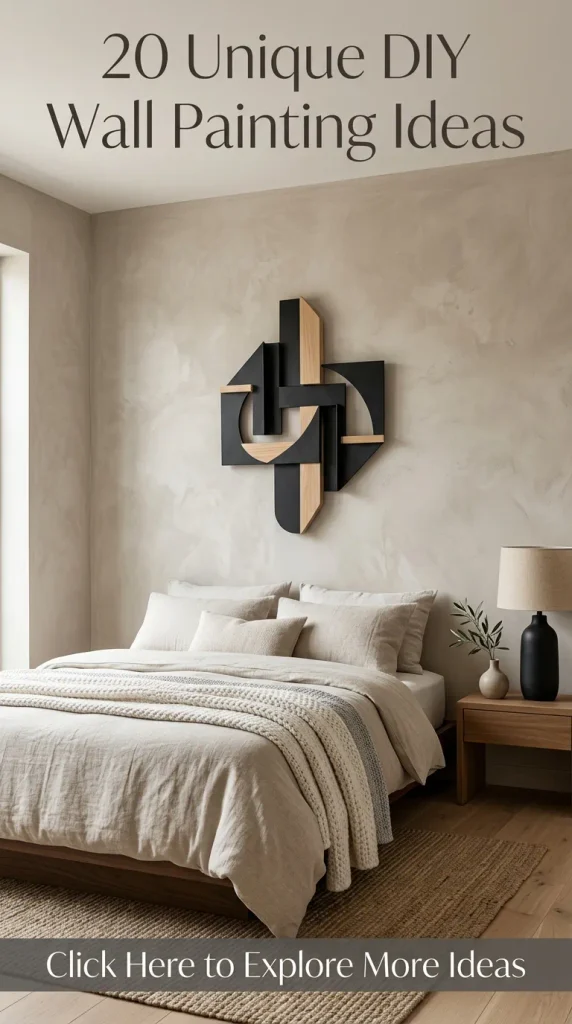
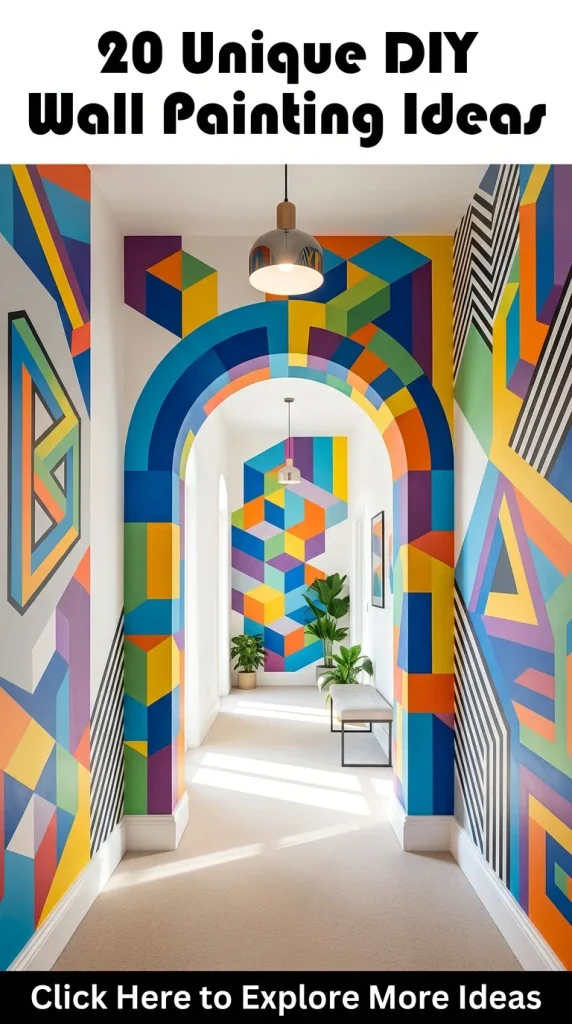
Transforming a blank wall doesn’t require an expensive gallery visit or a professional interior designer. With a little creativity and basic supplies, your walls can become a canvas that reflects your personal style. DIY wall painting is one of the most cost-effective, high-impact ways to completely shift the mood, texture, and aesthetic of any room. Whether you live in a sprawling home or a cozy rental apartment, these twenty gorgeous, unique, and Pinterest-friendly wall painting ideas will help you elevate your space.
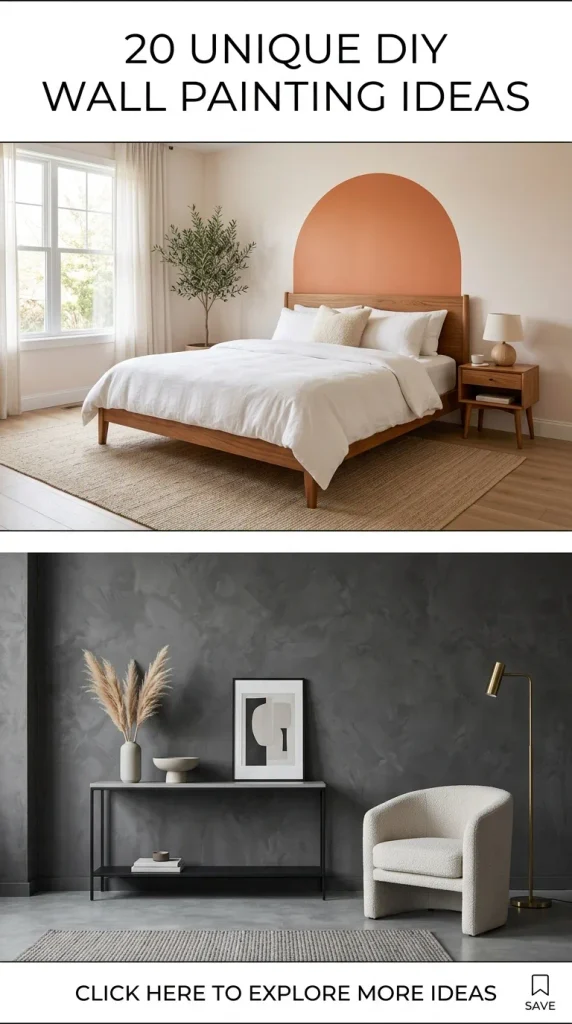
1. Minimalist Two-Tone Arch Break away from traditional rectangular boundaries by painting a soft, curved arch behind a piece of furniture like a bed, desk, or sofa. This creates an instant architectural focal point and adds organic movement to a room.
- Materials Needed: Base wall color, contrasting accent paint color, pencil, string, pushpin, small level, painter’s tape, fine-tip brush, and a roller.
- How to Make It: Paint your base wall and let it dry completely. Create a makeshift compass by tying a string to a pushpin and a pencil at your desired radius. Pin the string to the wall at the center point of where you want the top of your arch to be. Keeping the string taut, draw the semi-circle curve. Use a level and painter’s tape to mark the straight vertical lines down to the floor. Carefully cut in along your pencil lines with a brush, then fill in the interior with your accent color using a roller.
- Tips & Variations: Opt for earthy terracotta, sage green, or warm cream tones for a modern bohemian aesthetic. You can also paint a double arch overlapping for a more complex, dimensional look.
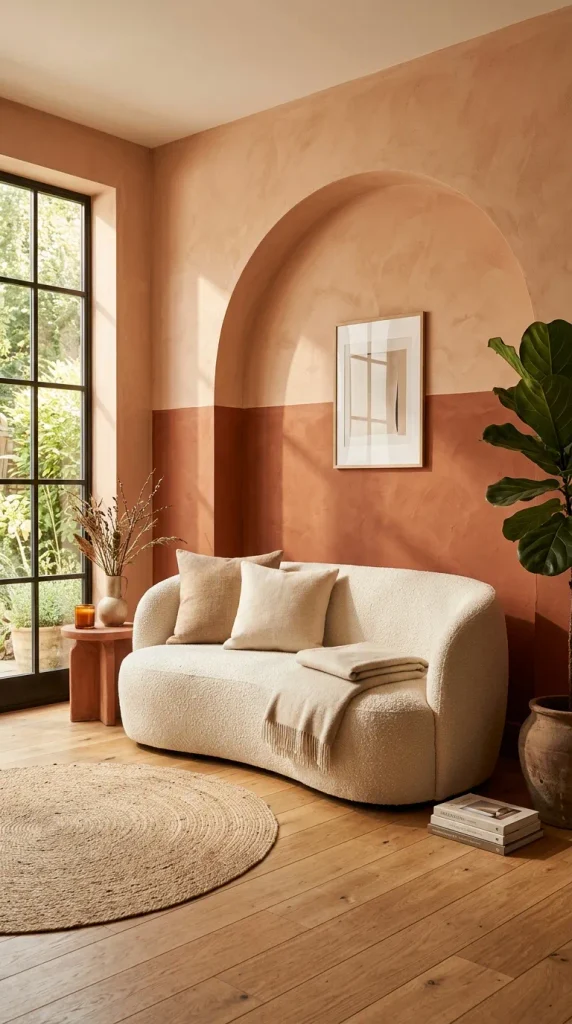
2. Textured Limewash Finish Limewash paint creates a cloudy, chalky, historic texture that catches the light beautifully and adds instant depth compared to flat modern paint.
- Materials Needed: Limewash paint or mineral paint, a large specialized limewash brush (often block-shaped), painter’s tape, and drop cloths.
- How to Make It: Prime your wall if necessary, ensuring a clean surface. Mix your limewash thoroughly. Using your large brush, apply the paint in cross-hatch, criss-cross strokes rather than straight up and down. Work in small sections (about three-by-three feet) so you can blend the edges while the paint is still wet.
- Tips & Variations: Layer two slightly different tonal shades for a richer, more cloud-like antique plaster effect. Perfect for Mediterranean, Japandi, or rustic minimalist bedrooms.
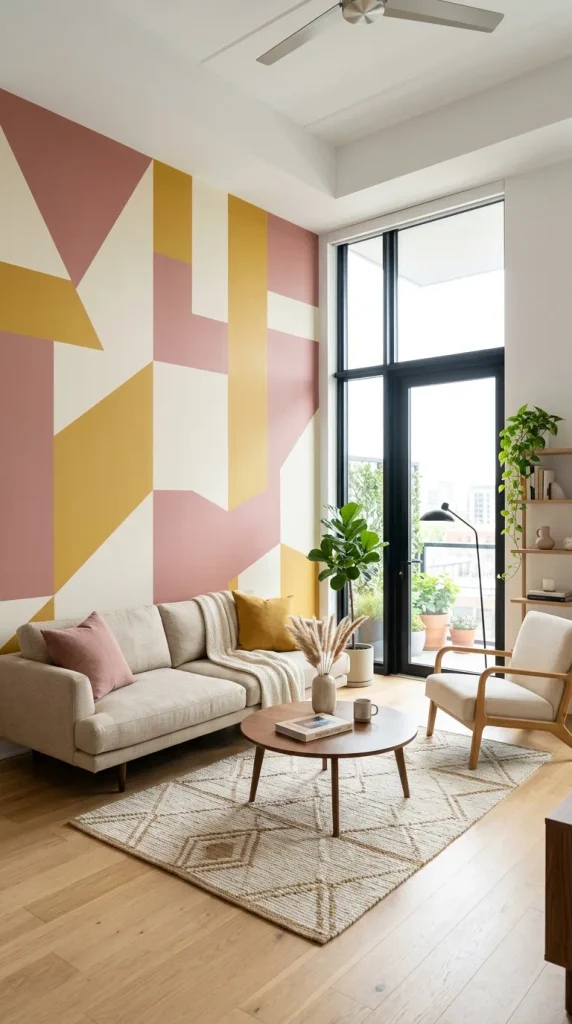
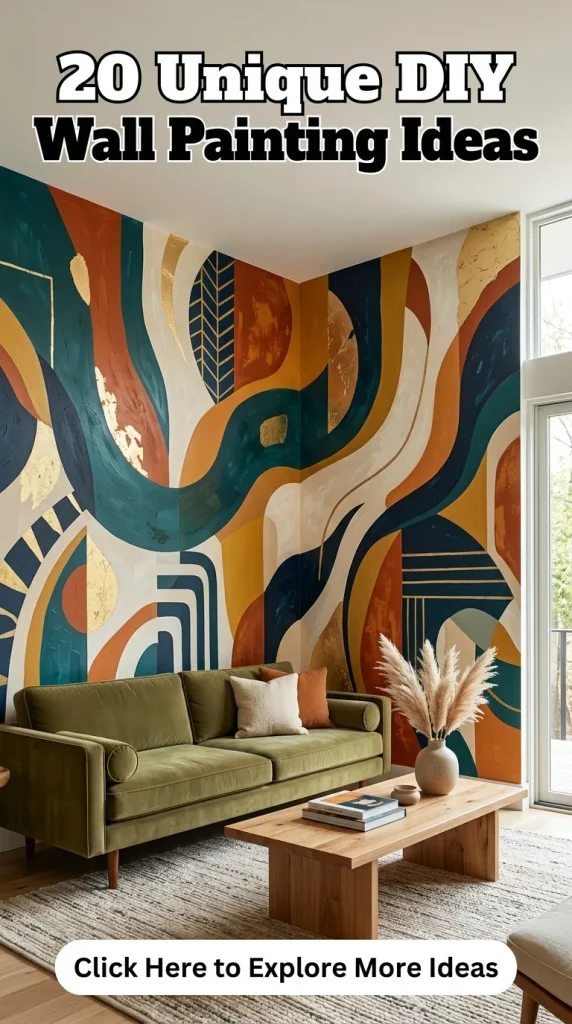
3. Abstract Color Blocking Juap opposing geometric shapes of varying colors can turn a standard accent wall into a piece of modern art. It is clean, youthful, and highly customizable to any color palette.
- Materials Needed: 3 to 4 complementary paint sample pots, high-quality painter’s tape, small rollers, and precision brushes.
- How to Make It: Sketch your geometric layout on a piece of paper first. Map out the shapes on the wall using painter’s tape, pressing down firmly to prevent bleeding. Paint the shapes one by one, letting them dry slightly before gently peeling the tape off at a 45-degree angle.
- Tips & Variations: Choose a monochromatic palette (e.g., four shades of dusty rose) for a subtle look, or go bold with contrasting jewel tones like emerald, mustard, and deep navy.
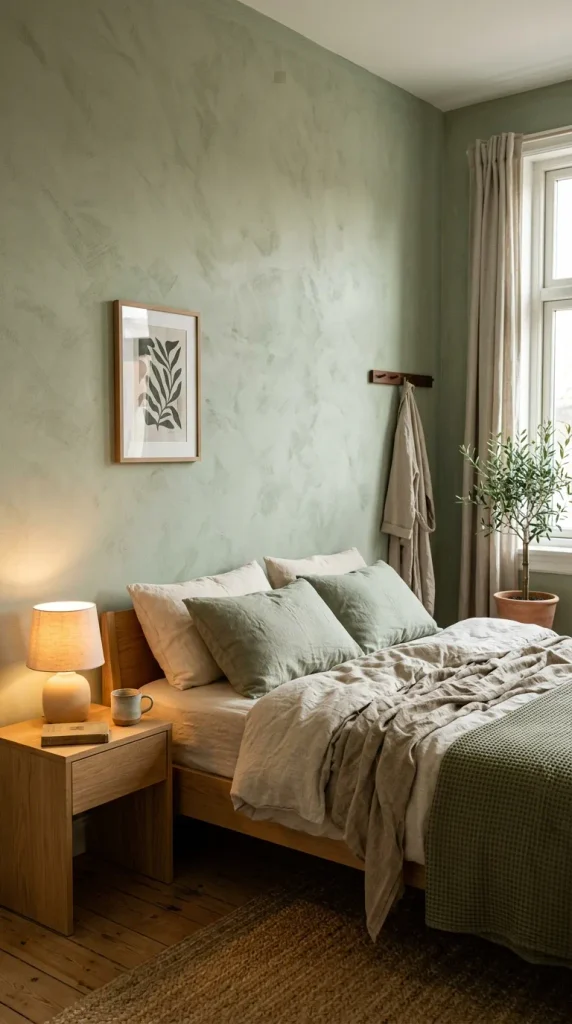
4. Ombre Sunset Wash Bring the serene feeling of dusk inside by blending two or more gradient colors smoothly from top to bottom.
- Materials Needed: Three shades of a color family (light, medium, dark), three rollers, spray bottle with water, and a wide dry brush or blending brush.
- How to Make It: Divide your wall horizontally into thirds. Paint the darkest shade on the bottom third, the medium shade in the middle, and the lightest shade on the top third. While the paint is still wet, mist the transition lines lightly with water. Using a clean, dry brush, gently feather the overlapping paint lines back and forth in a sweeping X-motion until the harsh lines disappear and a seamless gradient emerges.
- Tips & Variations: A soft peach-to-lavender gradient creates a dreamy, ethereal aesthetic perfect for creative studios or reading nooks.
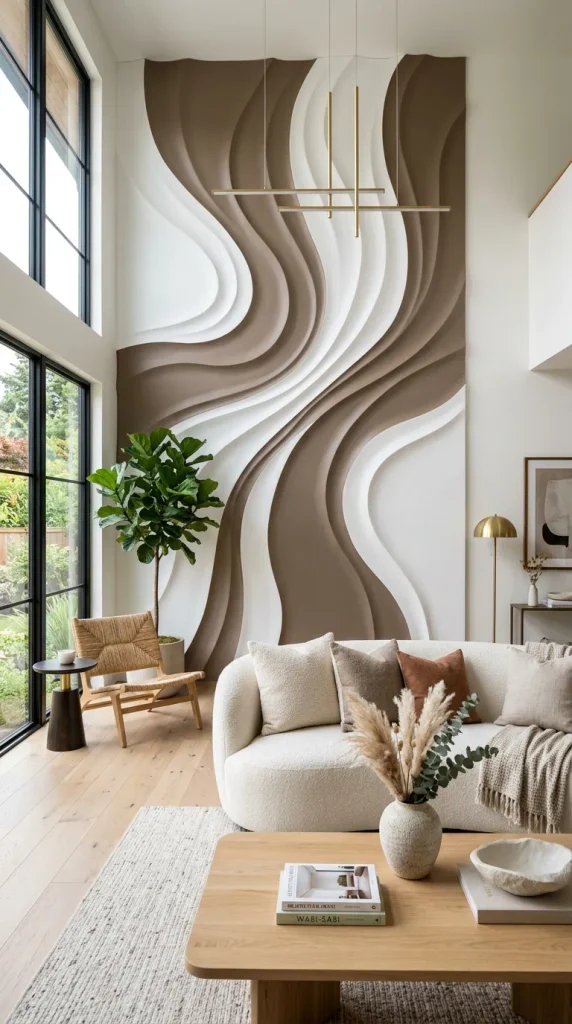
5. Modern Organic Wave Panel Instead of rigid lines, soft flowing horizontal waves bring an organic, calming rhythm across a wide expanse of wall.
- Materials Needed: Base coat paint, accent paint, chalk, a long flexible measuring tape or strip of cardboard, painter’s tape, and fine brushes.
- How to Make It: Paint the entire wall in your background tone. Use chalk to freehand a sweeping, undulating wave line across the width of the wall. Tape along your chalk line to ensure a sharp edge on one side, then paint the upper or lower section with your contrasting color.
- Tips & Variations: Use metallic gold leaf along the wave boundary for an upscale, luxurious touch that catches evening lighting.
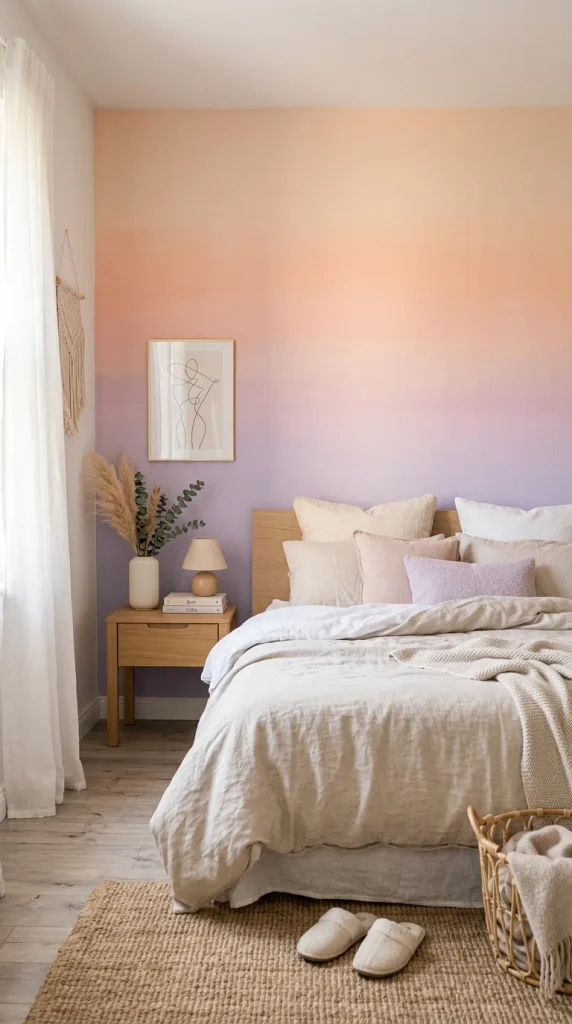
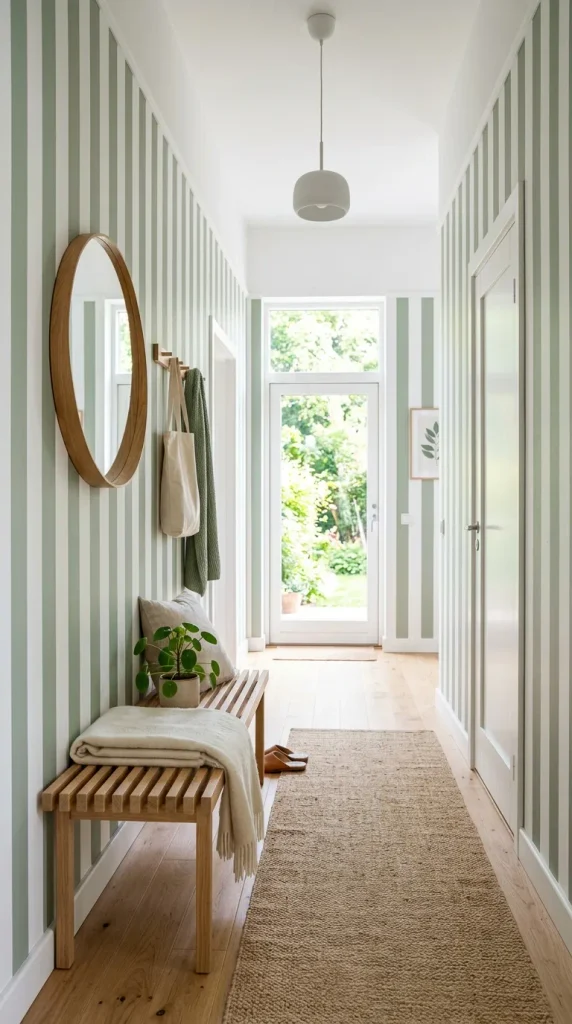
6. Scandi-Chic Vertical Stripes Vertical stripes visually elongate low ceilings and introduce clean, orderly Scandinavian elegance into a bedroom or hallway.
- Materials Needed: Base coat, contrasting stripe color, laser level or standard level, measuring tape, and delicate-surface painter’s tape.
- How to Make It: Paint the entire wall in the lighter of your two chosen colors and allow 24 hours to cure. Measure the wall width and divide by your desired stripe width to ensure even spacing. Use a laser level and painter’s tape to map out the vertical lines. Seal the edges of the tape by painting over them with the base color first, then fill in with your stripe color.
- Tips & Variations: Muted sage green and crisp white create a fresh, timeless look, while wide, high-contrast taupe and cream stripes offer a cozy, tailored feel.
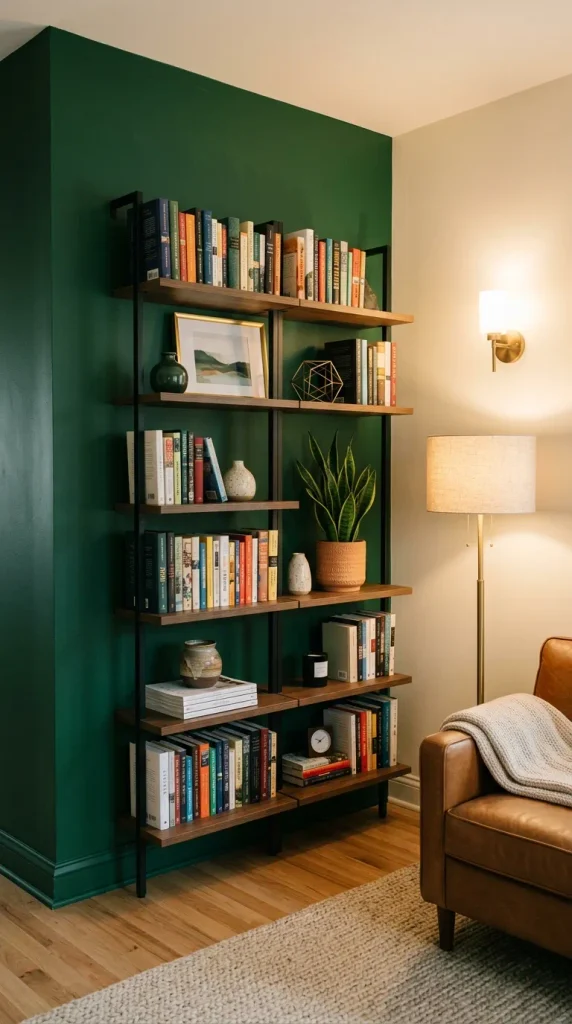
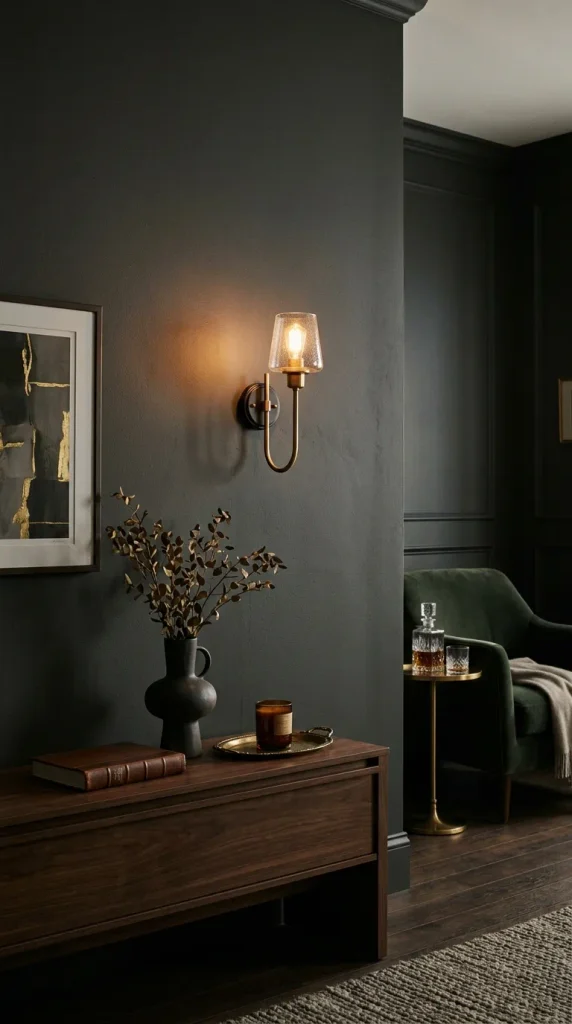
7. Moody Dark Statement Wall Embrace dramatic interior design by enveloping a room in an ultra-saturated, light-absorbing dark hue.
- Materials Needed: Matte or ultra-matte dark paint (charcoal, espresso, or forest green), high-density foam rollers, angled brush, and good lighting.
- How to Make It: Prep your walls meticulously, as dark paint highlights surface imperfections. Cut in the edges carefully with your brush, then roll the paint in a continuous “W” pattern to ensure even distribution. Apply two full coats, allowing ample drying time in between.
- Tips & Variations: Pair a deep charcoal wall with warm brass fixtures and lush green plants to create a high-contrast, sophisticated sanctuary.
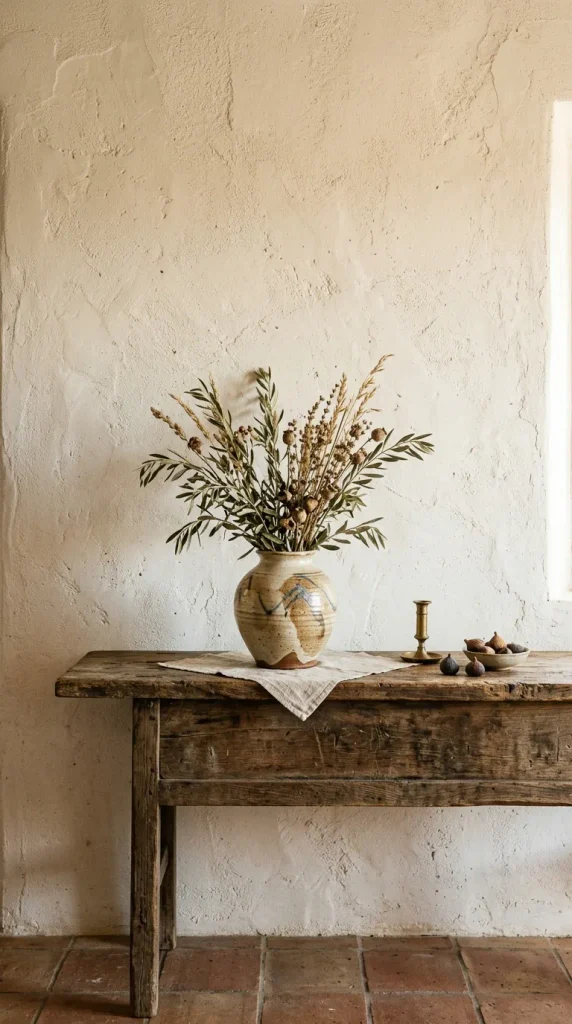
8. Textured Sand Plaster Effect Add tactile dimension to your walls by mixing fine aggregate or clean sand directly into your paint for a Mediterranean stucco finish.
- Materials Needed: Interior latex paint, fine silica sand or texturing powder, plastic putty knife or trowel, and a mixing bucket.
- How to Make It: Mix a cup of sand into every liter of paint until you achieve a grainy, yogurt-like consistency. Apply the textured mixture to the wall using a putty knife or trowel in sweeping, overlapping arc motions to create directional ridges and valleys.
- Tips & Variations: Paint over the dried textured wall with a crisp chalk white to mimic sun-baked Greek island architecture.
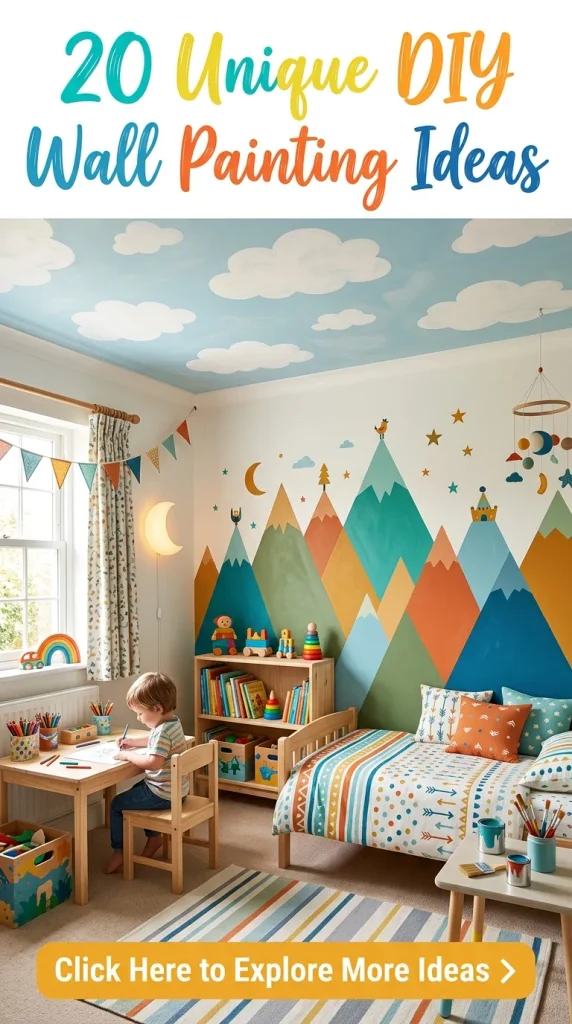
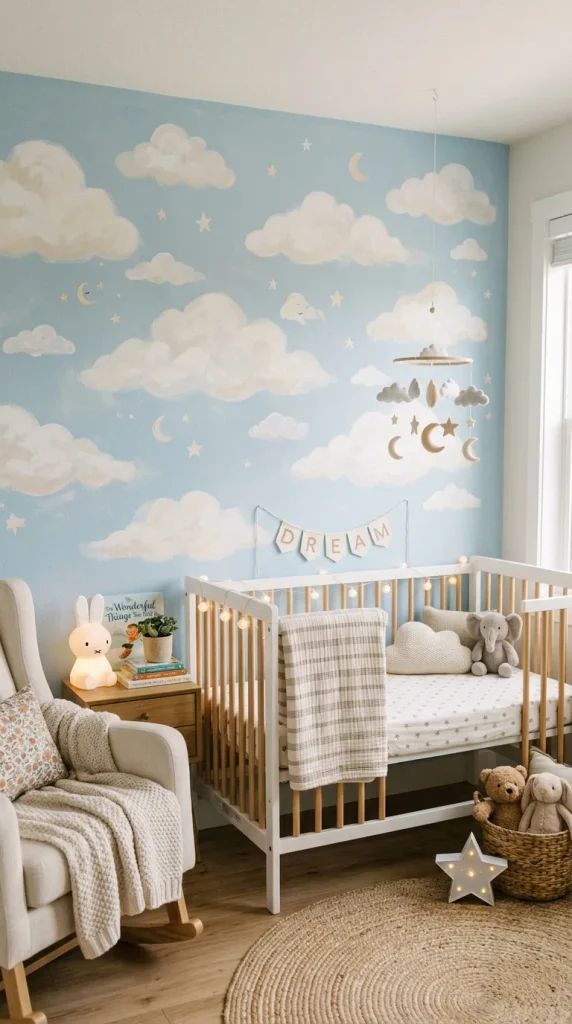
9. Soft Pastel Cloud Murals Create an dreamy, floating-in-the-sky atmosphere with a hand-blended cloud wall mural, ideal for nurseries, creative spaces, or relaxing bedrooms.
- Materials Needed: Soft blue or lavender background paint, white paint, natural sea sponge, and a soft microfiber cloth.
- How to Make It: Paint your base background color. Pour a small amount of white paint onto a tray. Lightly dab your sea sponge into the white paint, tap off excess on a paper towel, and gently press puffy, irregular cloud shapes onto the wall. While the paint is still slightly wet, use a clean cloth to softly blot and feather out the edges of the clouds so they blend into the sky.
- Tips & Variations: Add hints of pale pink and gold dust around the edges of the clouds to simulate a magical sunrise.
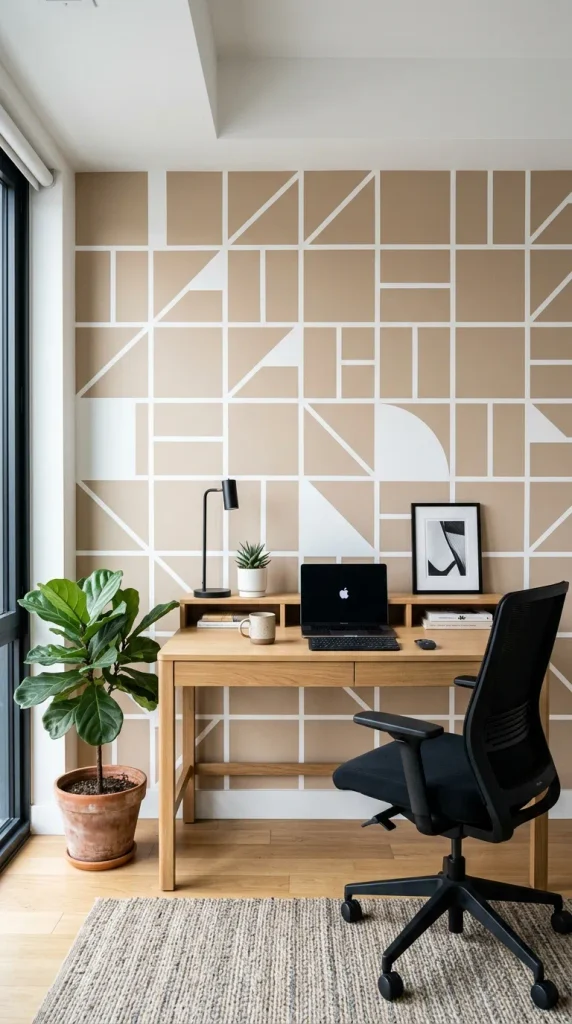
10. Geometric Grid Accent For a structured, contemporary, and architectural look, a delicate grid pattern adds depth without overwhelming a space.
- Materials Needed: Base color paint, accent line color, chalk line reel or long straight edge, spirit level, and thin 1/4-inch or 1/2-inch painter’s tape.
- How to Make It: Paint your wall in the background color. Measure and mark equal grid intervals across the wall using a level. Apply thin painter’s tape firmly along all grid lines, pressing down hard at intersections. Paint over the grid lines with your accent color, let it tack up, and peel the tape away.
- Tips & Variations: Use a rich warm beige background with crisp white lines for a clean, sophisticated grid that mimics high-end Japanese room dividers.
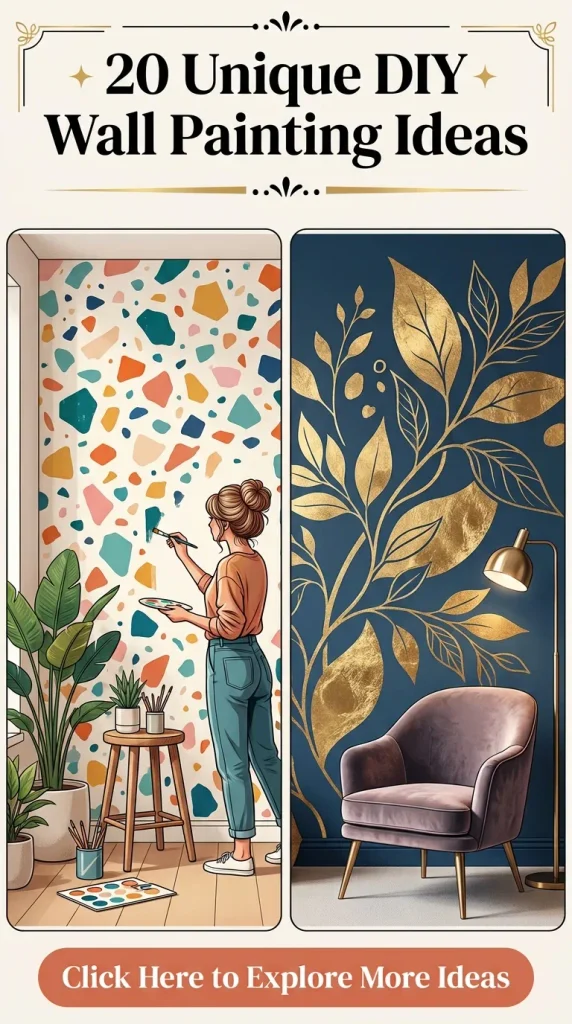
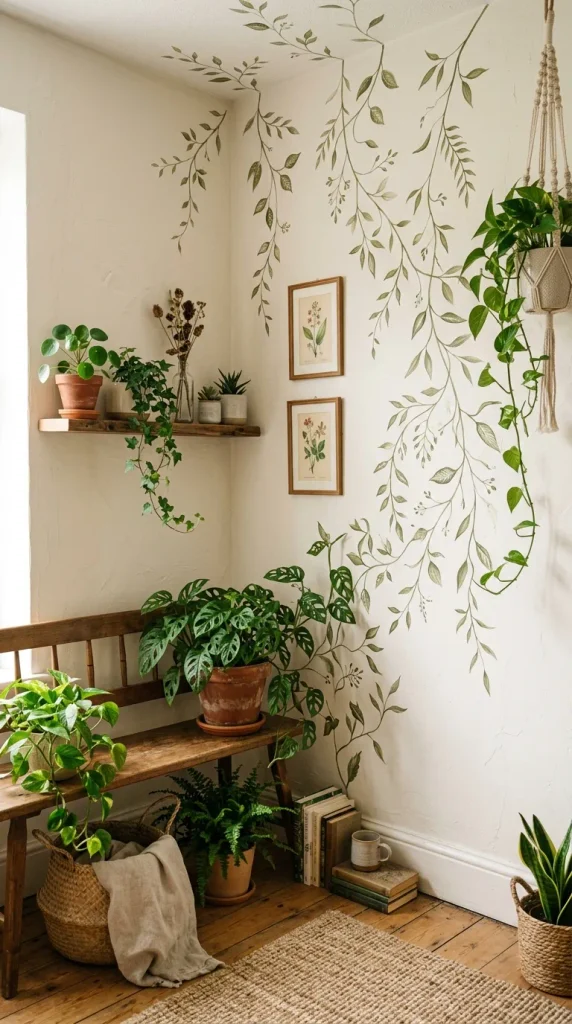
11. Freehand Botanical Wall Vines If you love houseplants, bring them directly onto your walls by painting delicate, trailing botanical vines and leaves.
- Materials Needed: Background wall paint, dark green or olive acrylic paint, fine-detail artist paintbrushes, and chalk.
- How to Make It: Lightly sketch wandering vine stems and leaf outlines on your wall with chalk. Once you are happy with the organic flow, trace over the chalk lines using your fine-detail brushes with earthy green tones. Vary the size of the leaves and add subtle veins for a realistic, hand-painted wallpaper effect.
- Tips & Variations: Paint trailing eucalyptus branches framing a vanity mirror or cascading down the side of a workspace.
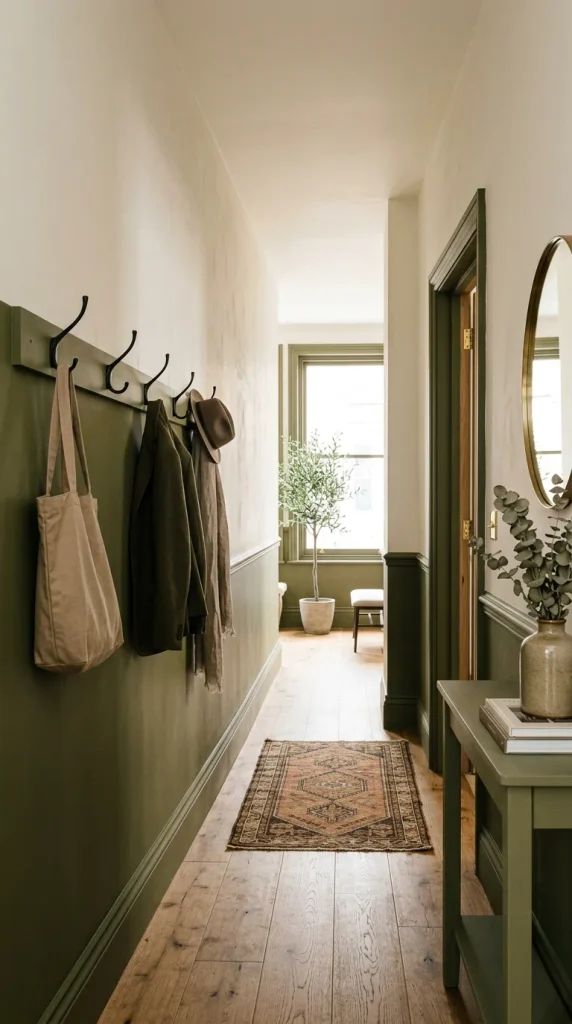
12. Color-Dipped Architectural Details Instead of painting an entire wall, highlight structural features like doors, molding, baseboards, or a small section of a wall in a bold accent color.
- Materials Needed: Accent paint color, painter’s tape, fine brushes, and mini foam rollers.
- How to Make It: Select a focal architectural element—such as painting the lower three feet of a wall plus the baseboards and door frame in a single uniform color. Tape off cleanly where the color block meets the neutral upper wall and roll your color evenly.
- Tips & Variations: Use a rich burgundy or olive green on the lower third of a hallway to instantly ground the space and protect walls from scuffs.
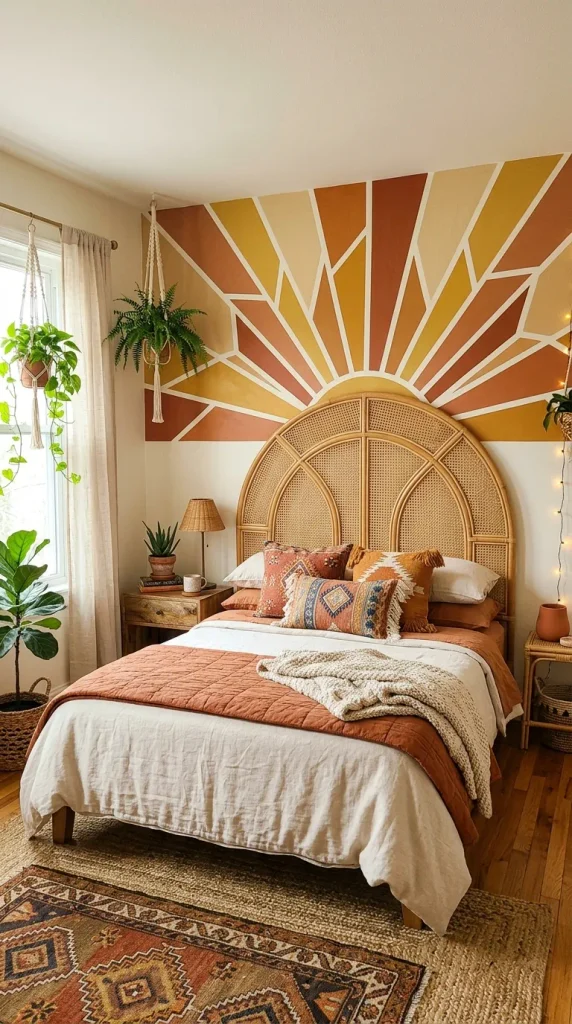
13. High-Contrast Painted Wall Murals (Sunburst) A radiant geometric sunburst motif behind a headboard or reading nook adds instant warmth, energy, and vintage 70s flair.
- Materials Needed: Center point marker, yardstick or string, painter’s tape, and 3 warm-toned paint colors (ochre, rust, terracotta).
- How to Make It: Mark a focal center point on the wall. Use long strips of painter’s tape radiating outward from this point like sun rays to map out alternating triangular beams. Paint alternate sections in your chosen warm palette, let dry, peel the tape, and fill in the remaining rays.
- Tips & Variations: Keep the palette muted with terracotta, dusty clay, and cream for a grounded, modern bohemian rendition of this classic motif.
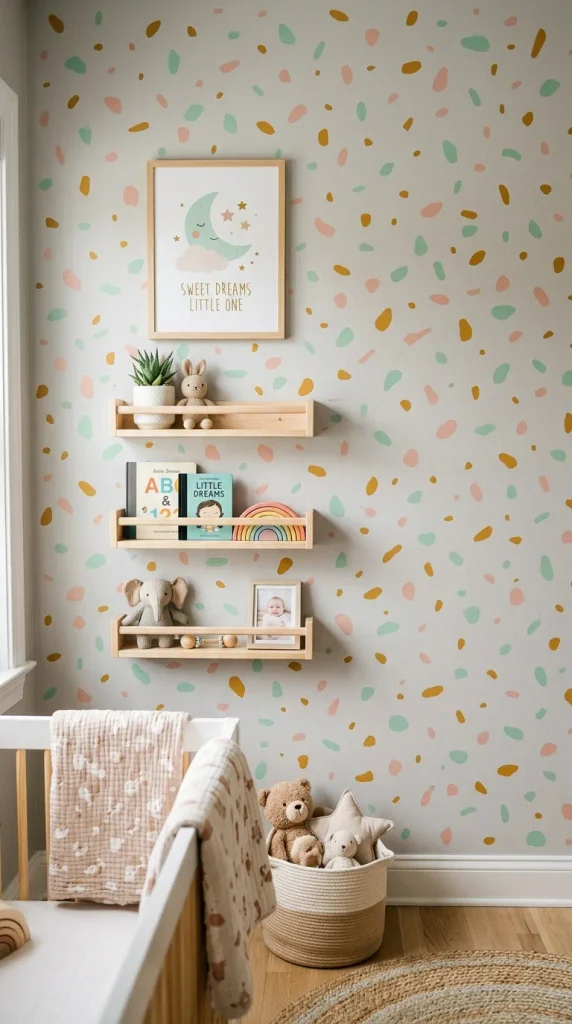
14. Faux Terrazzo Speckle Wall Mimic the playful, speckled look of Italian terrazzo stone directly onto your walls with delicate hand-painted chips.
- Materials Needed: Neutral base wall paint, artist brushes, and 3 to 4 sample pots of contrasting acrylic paint colors.
- How to Make It: Paint your wall a solid neutral tone like soft gray, cream, or warm beige. Using small flat-headed or fine artist brushes, dab random, short, angled brush strokes across the wall to resemble chipped stone fragments. Mix up the colors and cluster some spots closer together while leaving other areas sparse.
- Tips & Variations: Use pastel mint, blush, and ochre flecks on a crisp white wall for a cheerful, artistic nursery or home office backdrop.
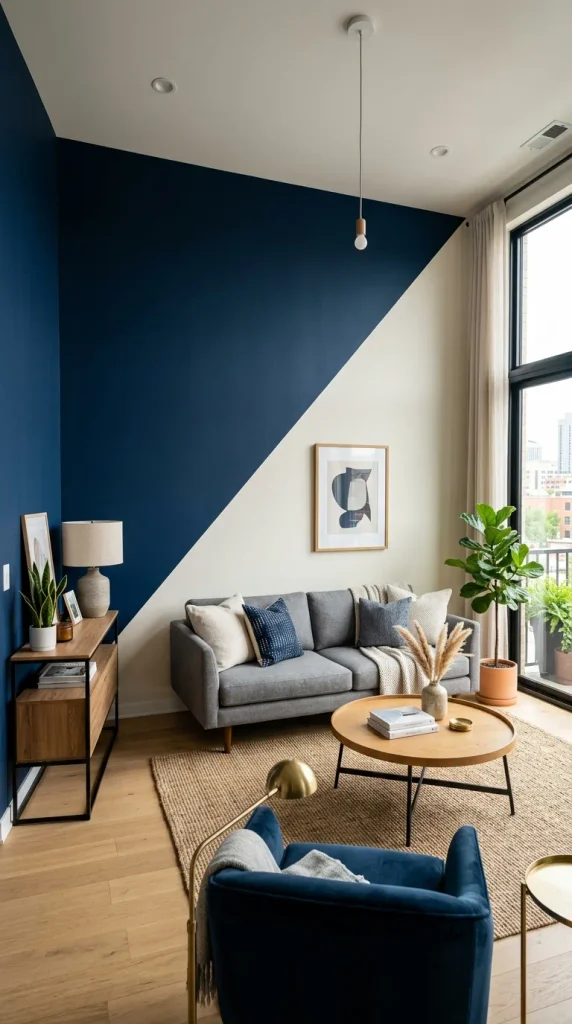
15. Two-Tone Diagonal Split A sharp diagonal slash across a wall breaks traditional boxy room layouts and introduces dynamic modern asymmetry.
- Materials Needed: Two contrasting paint colors, chalk line or long straight edge, high-adhesion painter’s tape, and a laser level.
- How to Make It: Paint the entire wall in your lighter color first and let dry. Use a laser level to project a clean diagonal line from corner to corner, marking it lightly with chalk. Apply painter’s tape precisely along the line. Paint the lower or upper triangle with your second color, pressing firmly along the tape edge, and peel immediately while slightly damp.
- Tips & Variations: Pair a deep moody navy blue on the bottom with a warm linen white on top for a striking, balanced contrast.
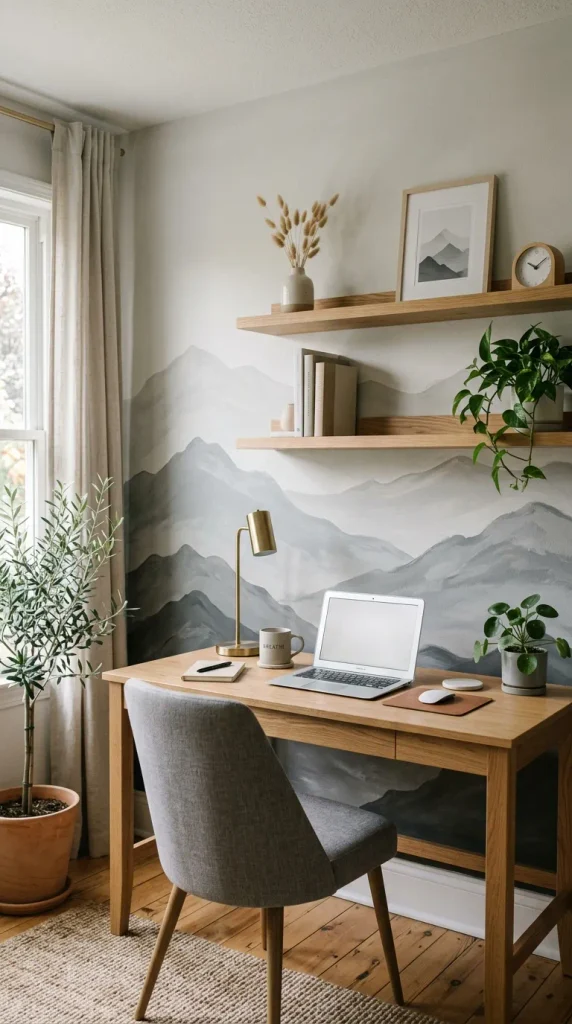
16. Monochromatic Painted Wall Murals (Mountain Range) Create a serene, layered landscape by painting stylized, overlapping mountain silhouettes across the base of a wall.
- Materials Needed: 3 shades of blue, gray, or green (from lightest to darkest), pencil, and standard painter’s tape.
- How to Make It: Sketch jagged or rolling mountain peak lines across the wall horizontally, stacking them in three distinct layers from back to front. Paint the furthest, lightest mountain range first. Once dry, paint the middle range overlapping it, and finally finish with the darkest foreground mountain range at the bottom.
- Tips & Variations: Use soft monochromatic greys and charcoals in a nursery or home office to cultivate a peaceful, grounding atmosphere.
17. Block Color Corner Wrap Draw the eye across a room by wrapping a bold block of color around an interior corner, framing furniture or shelving uniquely.
- Materials Needed: Accent paint, painter’s tape, measuring tape, and a roller.
- How to Make It: Choose an interior corner where two walls meet. Measure an equal distance out from the corner on both walls (e.g., three feet wide) and run vertical strips of painter’s tape from ceiling to floor. Paint the enclosed section across the corner, creating an immersive color block pillar.
- Tips & Variations: Install floating wooden shelves inside the painted corner block to make your decor pop against the saturated background.
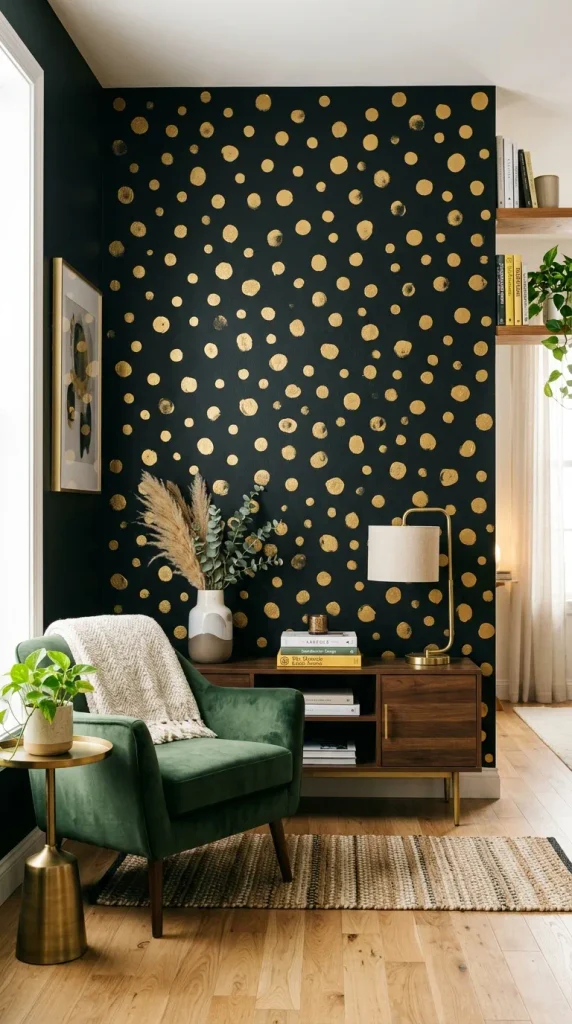
18. Whimsical Polka Dot Scatter A playful scatter of hand-painted dots adds texture, personality, and subtle pattern to an otherwise plain accent wall.
- Materials Needed: Base paint, small round sponge pouncer or stencil brush, and accent paint color.
- How to Make It: Paint your base wall. Dip your round sponge pouncer lightly into your accent paint, dab off excess, and press firmly onto the wall in a random, organic scatter pattern. Step back frequently to ensure even distribution across the wall surface.
- Tips & Variations: Use metallic gold or copper paint on a matte black or deep forest green wall for a moody yet glamorous constellation effect.
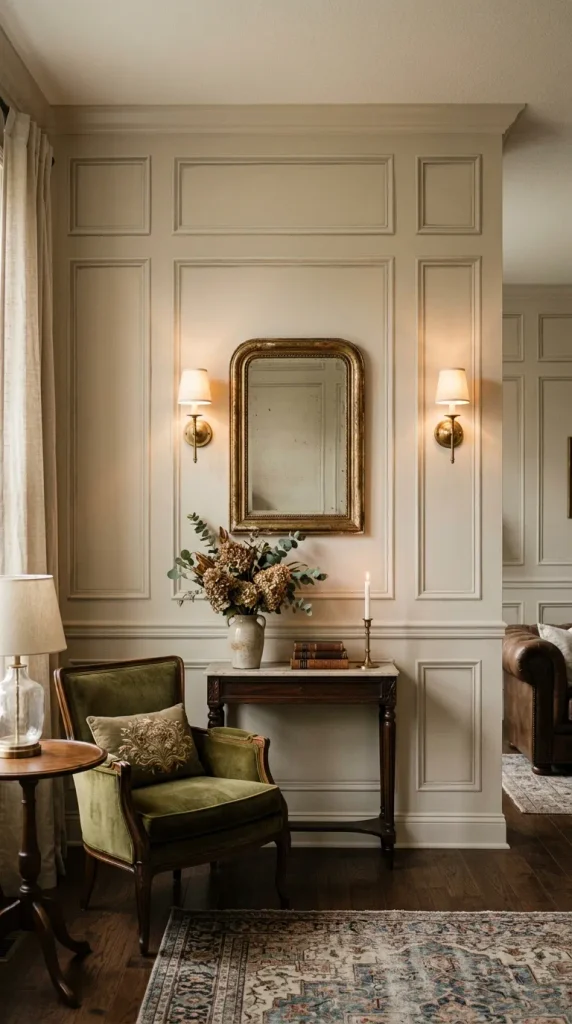
19. Painted Panel Molding Effect If you love traditional wainscoting or wall paneling but are renting or on a budget, you can paint faux picture-frame panels directly onto the wall.
- Materials Needed: Base wall color, contrasting panel color, chalk, a long metal ruler, spirit level, and fine artist brushes.
- How to Make It: Map out rectangular frame layouts on your wall with chalk, using a level to ensure straight lines. Carefully paint thin, clean rectangular borders using your fine brushes to mimic raised wooden trim molding.
- Tips & Variations: Paint the faux frames in a shade slightly darker than your wall color for a sophisticated, subtle trompe-l’œil paneling effect.
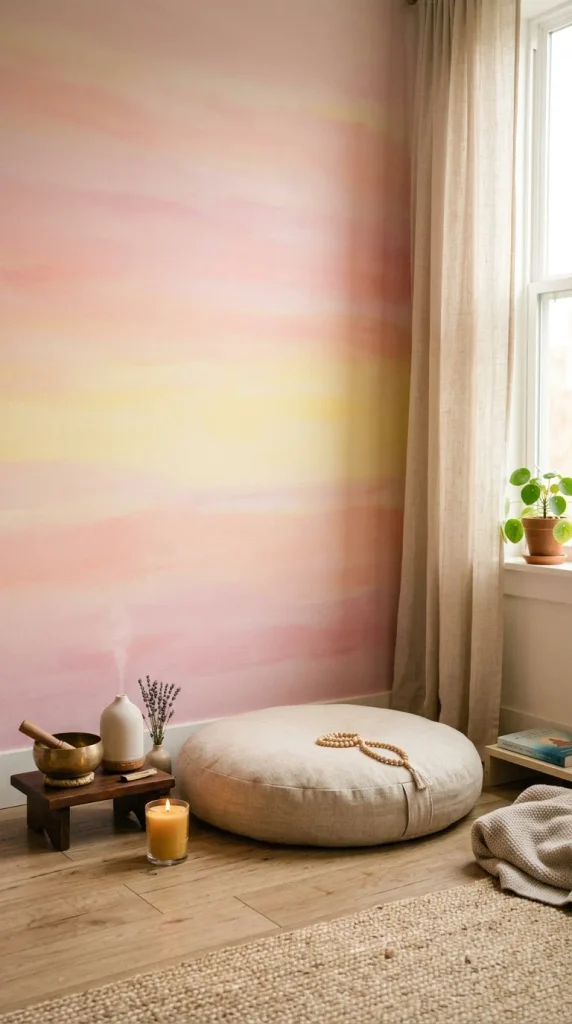
20. Color-Washed Abstract Pastel Horizon Capture the ethereal look of a misty morning horizon by washing soft, blended pastel tones across the center of your wall.
- Materials Needed: Soft white base paint, pastel pink and yellow acrylic paints, wide soft-bristle brush, and a spray bottle with water.
- How to Make It: Paint your wall a clean soft white. Lightly mist a horizontal band across the middle of the wall with water. Apply watered-down washes of pastel pink and yellow, blending the edges softly with a wide brush in circular motions until it creates a glowing, hazy horizon line.
- Tips & Variations: Ideal for meditation corners, sunlit breakfast nooks, or serene vanity spaces where you want to evoke calm morning energy.
More ideas to come in future addition!