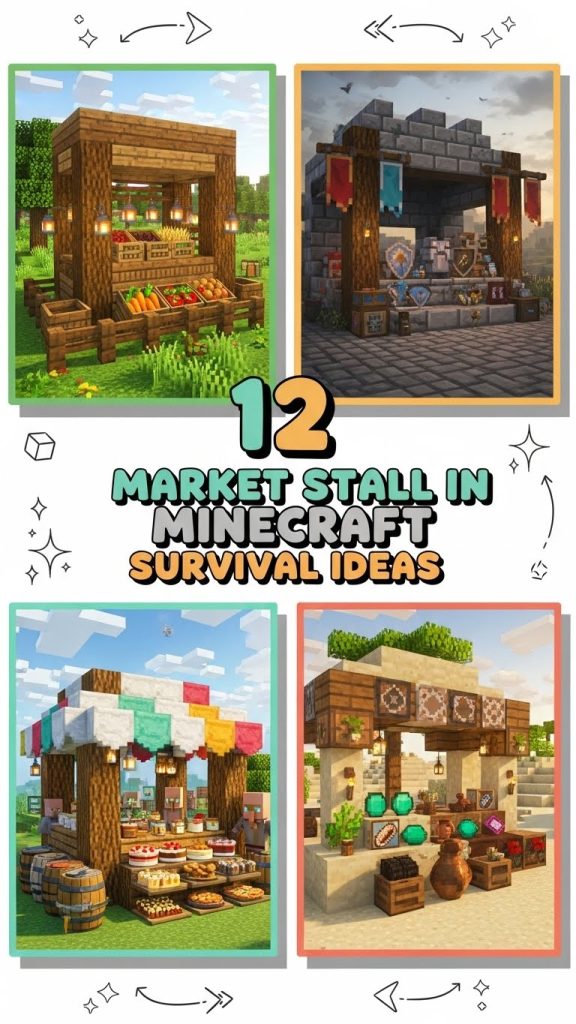
Creating a market stall in Minecraft Survival is more than just building a place to trade—it’s about storytelling, immersion, and giving life to your world. A well-designed stall can make a village feel alive, turn a lonely road into a bustling trade route, or even become the heart of a survival economy. Whether you play solo, with friends, or on a survival server, market stalls offer endless creative possibilities while remaining practical and resource-friendly.
In survival mode, every block matters. That’s why the best market stall builds combine realism, functionality, and smart material choices. From rustic wooden booths to fantasy-inspired setups, market stalls can reflect different biomes, professions, and cultures within your Minecraft world. These ideas focus on builds that feel believable, visually attractive, and achievable without creative-mode excess.
Below are ten amazing market stall ideas designed specifically for Minecraft Survival. Each one emphasizes realism, atmosphere, and Pinterest-worthy aesthetics that players love to save, recreate, and expand upon.
1. Rustic Village Farmer’s Stall
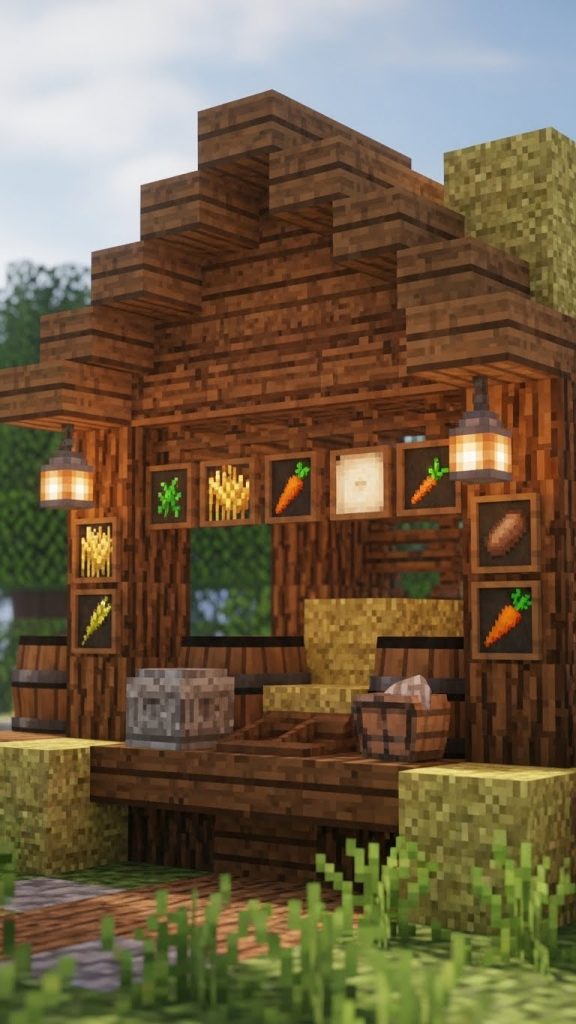
The rustic farmer’s stall is one of the most classic and immersive builds you can create in survival mode. Built primarily with oak or spruce wood, fences, slabs, and trapdoors, this stall blends naturally into plains or village environments. The roof is often made using stair blocks to create a slanted canopy, supported by fence posts for an open and welcoming look.
Crates filled with hay bales, barrels, and composters instantly signal that this stall sells crops. Adding item frames displaying wheat, carrots, potatoes, and beetroot gives it a functional feel. Lanterns hanging from the roof provide soft lighting at night while maintaining a cozy atmosphere.
This type of stall works perfectly near farms or village paths and is ideal for early-game survival. It feels authentic, doesn’t require rare resources, and instantly enhances the realism of any settlement.
2. Medieval Blacksmith Market Booth
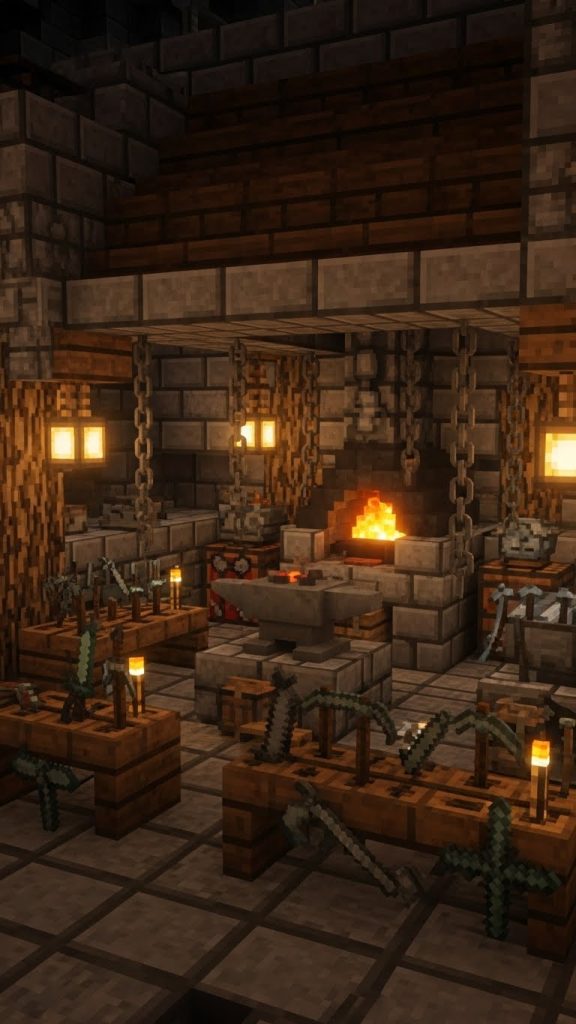
A blacksmith stall brings strength and industry into your survival world. Built with stone bricks, cobblestone, and dark wood, this stall has a heavier, more grounded appearance. An anvil placed prominently at the front acts as a focal point, while blast furnaces and smokers suggest active metalwork.
Chains, iron bars, and grindstones add detail and texture, making the stall feel functional rather than decorative. Using item frames with iron tools, armor pieces, or ingots gives the impression of trade without needing NPC interaction.
This stall fits beautifully in medieval towns, castle courtyards, or near mines. It’s especially useful in survival worlds where tool trading or gear storage plays a central role.
3. Traveling Desert Merchant Stall
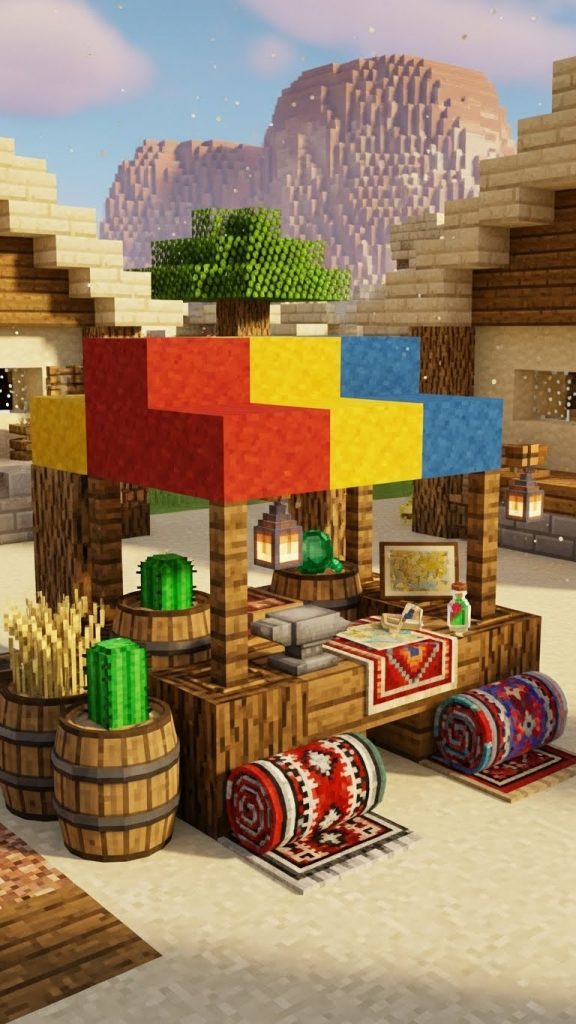
Inspired by wandering traders and desert caravans, this market stall is perfect for arid biomes. Sandstone, smooth sandstone, cut sandstone, and acacia wood form the core materials, giving the stall a warm and sun-baked look. The canopy can be made using colored wool or banners to create a fabric-like effect.
Decorative elements like carpets, flower pots with cacti, and barrels arranged like travel supplies help sell the idea of a roaming merchant. This stall looks best placed near desert villages, oasis builds, or along long trade routes.
In survival mode, this design adds cultural depth and variety to your world, making the desert feel alive rather than empty.
4. Harbor Fish Market Stall
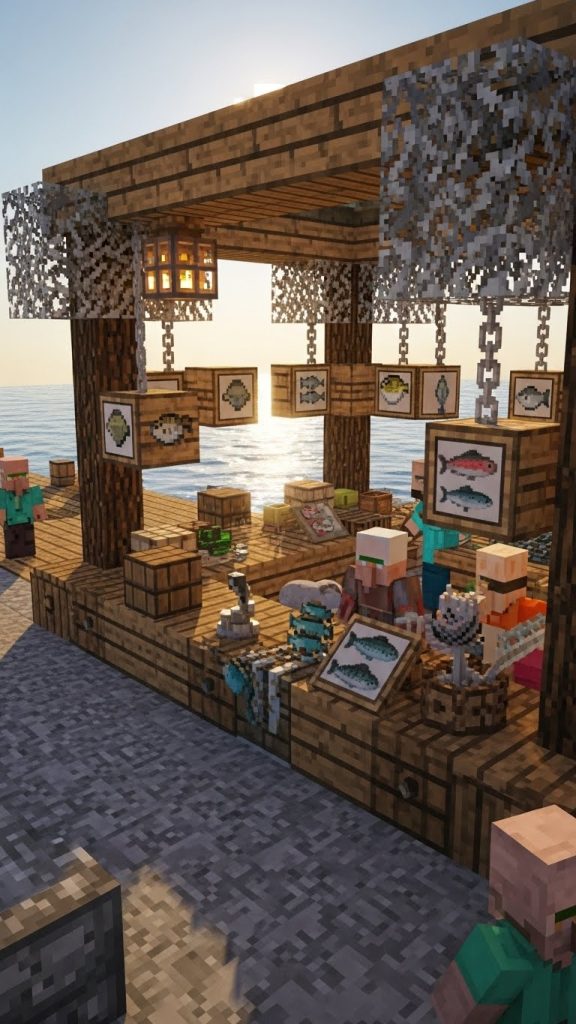
A fish market stall brings coastal life into your Minecraft survival world. Built near water, docks, or harbors, this stall uses spruce or dark oak wood combined with barrels, slabs, and trapdoors. The roof can be simple, allowing the surrounding ocean or river to act as part of the scene.
Item frames with cod, salmon, tropical fish, or even fishing rods instantly communicate the stall’s purpose. Adding waterlogged blocks, sea lantern accents, and fishing nets made from chains enhances realism.
This stall works especially well in survival worlds that focus on fishing, boating, or ocean exploration. It makes coastal towns feel busy and economically active.
5. Enchanted Potion Vendor Stall
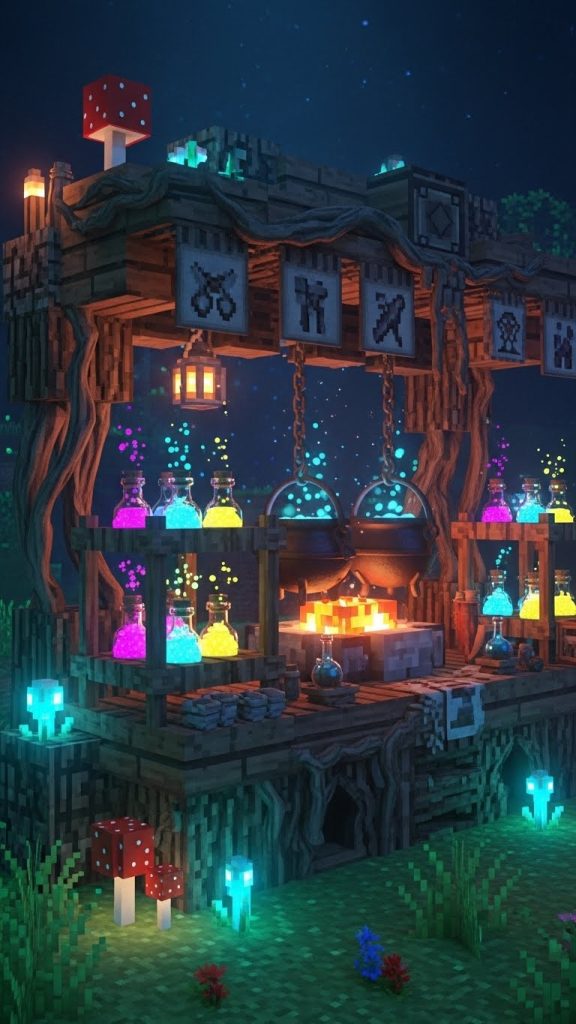
For players who love magic and fantasy, the potion vendor stall is a perfect fit. Built using warped or crimson wood, combined with dark stone and glass bottles, this stall feels mysterious and arcane. Brewing stands act as the centerpiece, surrounded by cauldrons and shelves made from slabs.
Using colored glass bottles and item frames to display potions adds vibrant visual interest. Soul lanterns or low lighting enhance the magical mood, making the stall glow softly at night.
This stall fits beautifully in fantasy towns, near wizard towers, or inside underground marketplaces. Even in pure survival, it feels special without requiring impossible materials.
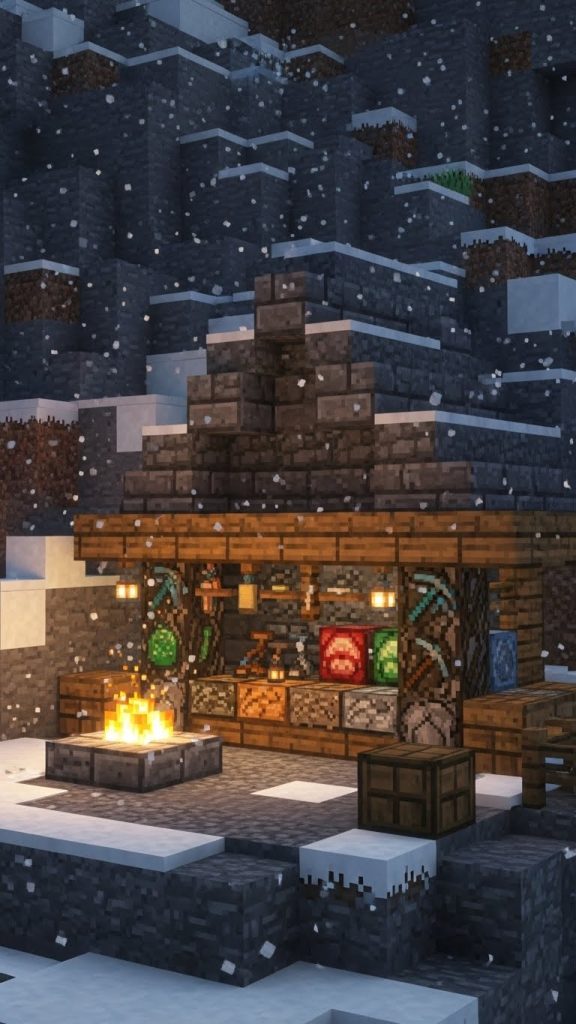
6. Mountain Trader’s Stone Stall
High up in the mountains, a rugged stone market stall feels natural and believable. Built into cliffs or plateaus, this stall uses stone, cobbled deepslate, and spruce wood for a weather-worn appearance. The roof can be minimal or partially carved into the rock for protection against snow.
Barrels, chests, and item frames displaying ores, coal, and gems give the impression of a mining-based trade economy. Campfires with hay bales underneath create a warm glow without melting snow, adding realism.
This stall works perfectly in survival worlds that focus on mining and exploration, giving players a reason to build and visit high-altitude settlements.
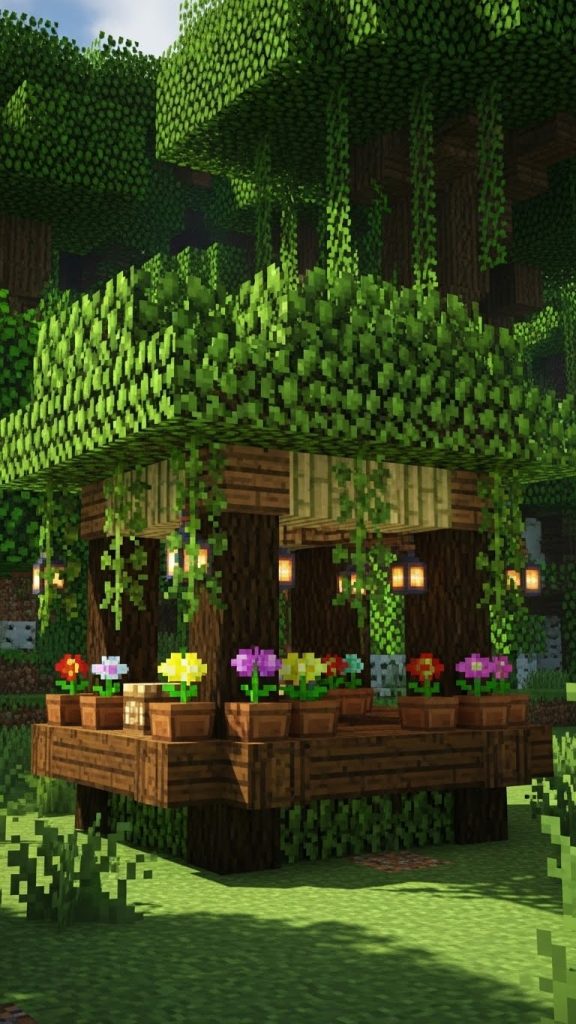
7. Jungle Herbalist Market Stall
A jungle herbalist stall feels alive, overgrown, and connected to nature. Built using jungle wood, bamboo, leaves, and vines, this stall blends seamlessly into lush environments. The roof can be made of leaf blocks or moss to create a natural canopy.
Flower pots, item frames with dyes, cocoa beans, and plants reinforce the idea of herbal trade. Water features like small cauldrons or dripstone details add freshness and depth.
In survival mode, this stall adds atmosphere and storytelling, making jungle biomes feel inhabited rather than wild and empty.
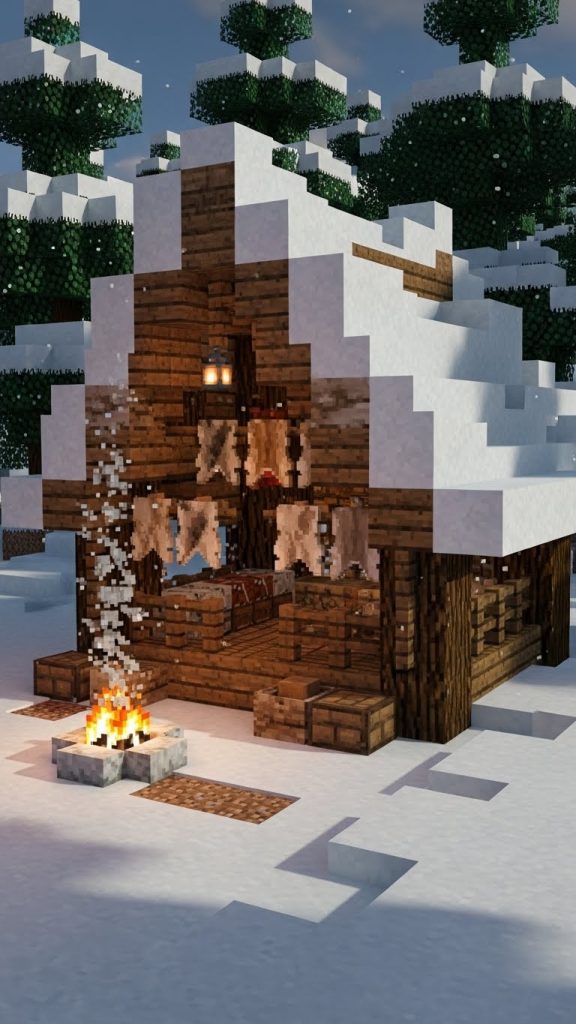
8. Snowy Tundra Fur Trader Stall
In cold biomes, a fur trader stall brings warmth and contrast to the icy landscape. Built with spruce wood, packed ice, and stone, this stall looks sturdy and insulated. The roof can be steep to prevent snow buildup, while campfires and lanterns provide warmth.
Item frames displaying leather armor, rabbit hide, or wool blocks suggest winter trade goods. Snow layers around the stall help blend it into the environment naturally.
This stall works beautifully in survival worlds where players want biome-specific builds that feel realistic and purposeful.
9. Underground Cave Market Stall
An underground market stall adds mystery and creativity to survival gameplay. Built inside caves or mineshafts, this stall uses wood supports, lanterns, and stone to feel carved into the earth. Glow berries and candles provide soft lighting without overwhelming the darkness.
Barrels and item frames with rare resources make the stall feel valuable and hidden. This design works especially well for secret trading hubs or multiplayer survival servers.
It turns ordinary caves into storytelling spaces rather than just resource zones.
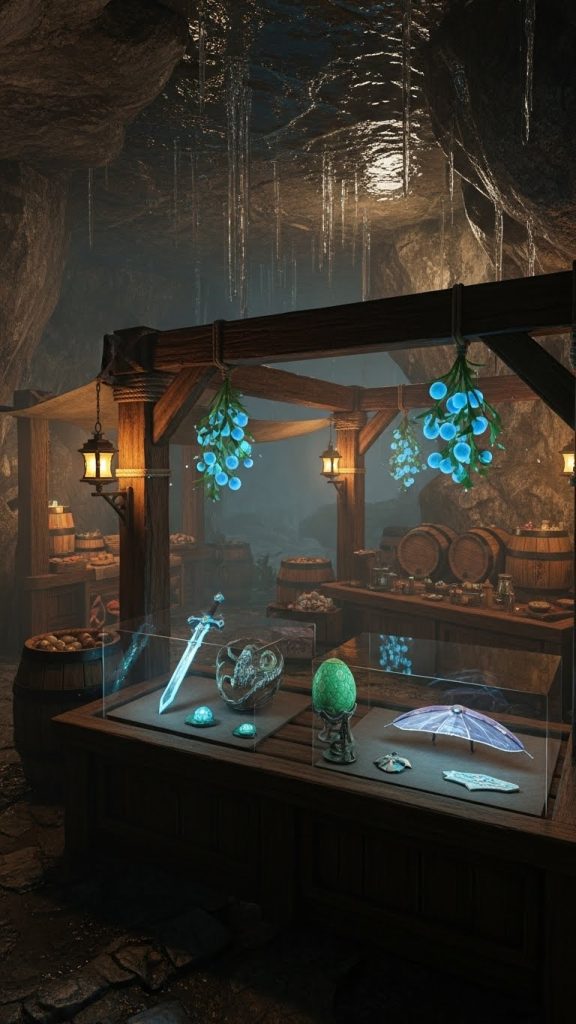
10. Grand Central Survival Marketplace Stall
This stall represents a more advanced survival build, often placed at the heart of a town or trading hub. Built with a mix of wood, stone, banners, and detailed roofing, it feels polished without being unrealistic.
Multiple item displays, seating areas, and decorative lighting make it feel like a permanent business rather than a temporary booth. This stall often becomes the visual centerpiece of a survival marketplace.
It’s ideal for late-game survival players who want to showcase progress, creativity, and community building.