Spread the love

A boho dining table centerpiece embodies effortless elegance, organic warmth, and layered artistic expression. The bohemian interior design ethos centers on free-spirited styling, marrying earthy textures, artisanal ceramics, handwoven fibers, and botanical beauty. Whether you host candlelit dinner gatherings, celebrate holiday feasts, or simply desire an inviting dining area, an intentional boho centerpiece instantly anchors your room with tactile charm and relaxed sophistication.

1. Pampas Grass and Terracotta Cluster

Introduction

The combination of feathered pampas grass and unglazed terracotta pottery is a foundational pillar of modern bohemian dining aesthetics. This centerpiece pairs the architectural, plume-like softness of sun-bleached grasses with the warm, earthen tones of baked clay. It brings natural height and sculptural warmth without feeling overly formal.

What This Idea Means

This look celebrates grounded minimalism mixed with wild natural movement. It embraces a neutral, sun-soaked color palette of sandy beiges, warm rust, soft cream, and desert ochre.

How to Make It

  • Select 3 to 5 terracotta vessels of varying heights and organic silhouettes.
  • Trim natural, dried pampas grass stalks to graduated lengths to create a dynamic visual cascade.
  • Place the tallest vase at the center or slightly off-center for balanced asymmetry, and insert the pampas plumes.
  • Group the smaller pots around the base, keeping some empty or adding single dried bunny tail stems for dimension.

Tips and Variations

  • Tip: Lightly mist your pampas grass plumes with natural hairspray outdoors before arranging to prevent shedding onto your dinner plates.
  • Variation: Swap out traditional rust-orange terracotta for chalky white or whitewashed ceramic vessels to lean into a soft coastal boho aesthetic.
2. Hand-Woven Macramé Runner with Brass Candlesticks

Introduction

Texture sits at the heart of bohemian styling, and a hand-knotted macramé runner provides the ultimate tactile foundation for your tabletop. When paired with vintage brass candlesticks, it marries cozy artisanal craft with heirloom gleam.

What This Idea Means

This centerpiece concept uses linear fiber art to draw the eye down the length of the dining table, grounding the space while dynamic candlelight adds intimate warmth and timeless character.

How to Make It

  • Lay an unbleached, natural cotton macramé runner flat along the spine of the dining table, letting fringe drape naturally over both ends.
  • Collect 5 to 7 vintage brass candlesticks of varying heights and patinas.
  • Insert natural beeswax or ivory tapered candles securely into each holder.
  • Weave the candle holders along the runner in a soft serpentine pattern, nestling them gently into the woven rope design.

Tips and Variations

  • Tip: Choose dripless tapers or trim wicks regularly to keep melted wax from staining the delicate cotton fibers of your macramé.
  • Variation: Introduce earthy sage green, mustard, or dusty terracotta tapered candles instead of classic ivory to add intentional color accents.

3. Dried Palm Spear and Wildflower Medley

Introduction

Sun-dried palm spears, bleached sun palms, and delicate dried botanicals evoke the free-spirited romance of the desert and tropical plains. This centerpiece brings crisp botanical geometry together with airy wildflower textures.

What This Idea Means

Dried florals capture a timeless, sustainable bohemian look. They eliminate the constant maintenance of fresh cut flowers while delivering rich sculptural silhouettes and enduring texture.

How to Make It

  • Choose a wide-mouthed, matte stone or speckled ceramic vase.
  • Insert 3 to 4 folded dried palm spears in natural blonde or bleached ivory at the back of the arrangement to establish height.
  • Layer in dried floral elements like lavender, strawflowers, cream statice, and dried eucalyptus branches to fill the mid-ground.
  • Finish the front lip of the vase with drooping bunny tails, craspedia billy balls, and small dried seed pods for organic depth.

Tips and Variations

  • Tip: Work in odd numbers when arranging palm spears and main focal stems to achieve a balanced, natural composition.
  • Variation: Paint the edges of select dried palm spears with a soft metallic gold or rose clay wash for an elevated, bohemian dinner party look.

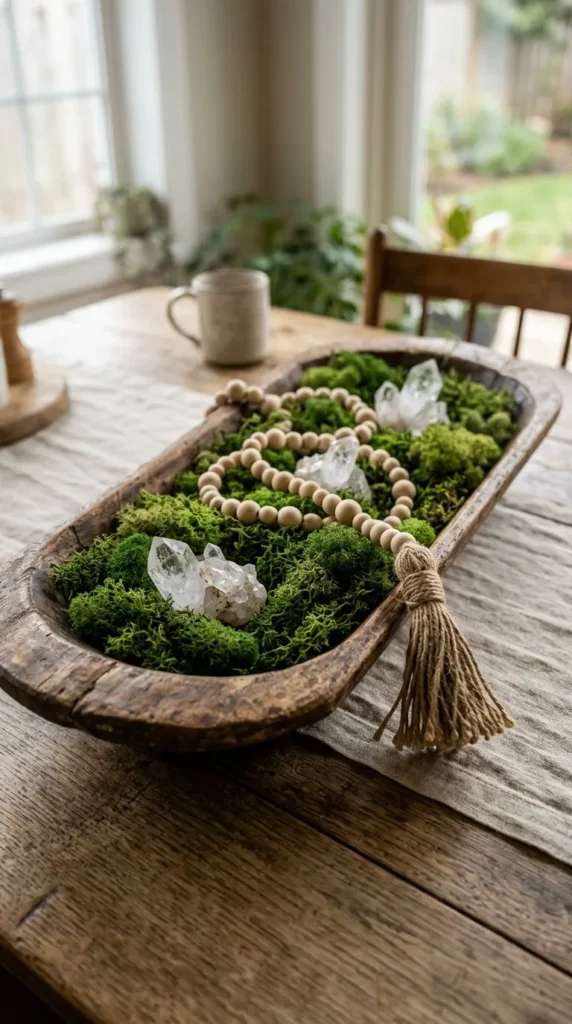
4. Vintage Dough Bowl with Moss, Wood Beads, and Crystals

Introduction

A hand-carved wooden dough bowl brings rustic heritage and rich timber grains directly to your tabletop. Layering it with moss, natural wood beads, and raw crystals turns a humble utility vessel into a bohemian conversation starter.

What This Idea Means

This low-profile centerpiece creates a connection to raw elements—earth, timber, and mineral stone—while keeping sightlines entirely open across the dining table.

How to Make It

  • Place a long, narrow hand-carved antique dough bowl or wooden trough in the center of the table.
  • Fill the base evenly with preserved green reindeer moss, sheet moss, and Spanish moss to establish a lush, living texture.
  • Drape a strand of unfinished natural wooden beads with jute tassels across one edge of the bowl, letting the tassel trail onto the table.
  • Nestle 2 to 3 raw, unpolished crystal points—such as raw quartz, citrine, or rose quartz—securely among the moss cushions.

Tips and Variations

  • Tip: Mist the preserved moss very lightly with cedar or lavender essential oil to infuse your dining room with a subtle, natural fragrance.
  • Variation: Substitute crystals for smooth river pebbles, air plants (Tillandsia), or small dried lotus seed pods for a more botanical, earthy finish.

5. Floating Amber Glass Bottle Vignette

Introduction

Amber glass emits an unmistakable golden glow when touched by natural daylight or evening candlelight. Gathering an eclectic assortment of vintage apothecary and glass bottles creates an effortlessly collected, romantic centerpiece.

What This Idea Means

This idea champions the art of curation and upcycling. It avoids rigid symmetry in favor of varied silhouettes, rich honeyed glass hues, and airy botanical stems.

How to Make It

  • Gather 7 to 9 amber glass bottles of diverse heights, neck widths, and vintage silhouettes.
  • Cluster the bottles along the center of the table, staggering heights naturally from high to low.
  • Fill each bottle with a single botanical specimen: dried honesty seeds (Lunaria), wheat stalks, fresh olive branches, or single dried daisies.
  • Interweave fairy lights on a delicate copper wire or place small tealights between the amber bottles to illuminate the warm glass tones.

Tips and Variations

  • Tip: Thrift genuine vintage medicine bottles, cider jugs, and apothecary vessels for authentic character and charming glass bubbles.
  • Variation: Mix in a few olive green and smoked brown glass bottles to enrich the earthy color spectrum across your table runner.

6. Rattan Basket Tray with Succulents and Pillar Candles

Introduction

Woven rattan and seagrass trays provide structured containment while adding woven texture to your dining setup. Outfitting a tray with hardy succulents and warm pillar candles produces a balanced, functional centerpiece.

What This Idea Means

A tray-based centerpiece offers mobility and relaxed order. It allows you to move your entire dining arrangement easily whenever extra room is needed for large family platters.

How to Make It

  • Center a shallow, circular or rectangular woven rattan tray with low raised edges on the table.
  • Arrange 3 thick, unscented ivory pillar candles of staggered heights inside the middle of the tray.
  • Place 3 to 4 small terracotta or unglazed ceramic pots of assorted succulents (like Echeveria, string of pearls, and jade) around the candles.
  • Fill any gaps on the tray surface with smooth sea glass, loose dried pine cones, or natural hazelnut shells.

Tips and Variations

  • Tip: Ensure the succulent pots have hidden saucers underneath to avoid water damage to the natural woven fibers of the rattan tray.
  • Variation: Use battery-operated LED pillar candles with moving wicks for a completely safe, heat-free ambient centerpiece.

7. Moody Wild Protea and Foraged Branch Statement

Introduction

Proteas bring bold, dramatic presence and exotic bohemian luxury to interior styling. Paired with wild, foraged botanical branches, this centerpiece introduces deep botanical romance to the dining room.

What This Idea Means

This concept moves away from light neutrals toward rich, moody bohemian aesthetics. It draws inspiration from untamed autumn fields and lush global flora.

How to Make It

  • Select a heavy, dark-toned ceramic urn or distressed stoneware vessel in charcoal, deep forest green, or matte black.
  • Anchor the vessel with 2 to 3 large King or Queen Protea blooms featuring deep blush, burgundy, or dusty rose petals.
  • Add unstructured branches with natural lichen, dried magnolia leaves, eucalyptus stems, and dark berry branches.
  • Allow the arrangement to flare outward organically to form an asymmetric, wild silhouette.

Tips and Variations

  • Tip: Cut woody branch stems at a sharp angle and score the bottoms lightly with shears so they absorb fresh water efficiently.
  • Variation: Introduce dark plum calla lilies or dried artichoke blossoms to add striking structural contrast alongside the protea petals.

8. Gauzy Cheesecloth Runner with Cascading Eucalyptus

Introduction

Soft, crinkled cotton cheesecloth brings a light, romantic fluidity to the dining table. Layered under fresh, aromatic eucalyptus garlands, it forms an effortless botanical centerpiece.

What This Idea Means

This centerpiece embodies relaxed bohemian romance, softening hard tabletop surfaces with flowing fabric and aromatic natural greens.

How to Make It

  • Choose a double-layer cheesecloth runner dyed in an earthy tone like dusty rose, sage green, terracotta, or warm sand.
  • Scrunch and gather the fabric lengthwise down the middle of the table, letting the ends pool gracefully onto the floor.
  • Lay fresh silver dollar eucalyptus and seeded eucalyptus branches along the peaks and valleys of the fabric folds.
  • Tuck small votive candle cups and fresh white ranunculus or spray roses among the eucalyptus leaves for added depth.

Tips and Variations

  • Tip: Hand-dye raw cheesecloth using natural ingredients like avocado pits for soft blush, onion skins for warm ochre, or black tea for vintage tan.
  • Variation: Swap out the fresh floral stems for dried pods, cinnamon sticks, or star anise for a cozy, autumnal bohemian mood.

9. Layered Woven Trivets with Eclectic Mini Vases

Introduction

Layering circular jute, seagrass, and cork trivets along the dining table builds an intriguing, multi-dimensional foundation. Populating each tier with miniature pottery pieces makes the arrangement feel curated and artistic.

What This Idea Means

This approach highlights artisanal texture through concentric shapes and casual scale. It breaks the dining table into visually engaging botanical and sculptural pockets.

How to Make It

  • Overlap 3 to 5 flat woven trivets made of braided jute, woven seagrass, and cork down the spine of your table.
  • Distribute an eclectic collection of handmade ceramic bud vases, small clay pots, and stoneware vessels across each trivet.
  • Place 1 or 2 small stems in each bud vase: dried grasses, single anemones, fresh chamomile blooms, or wild herbs like rosemary.
  • Dot small ribbed glass tealight holders around the trivet perimeters to link the elements together.

Tips and Variations

  • Tip: Vary the diameters and thicknesses of the trivets to create natural height transitions across the surface.
  • Variation: Add small hand-pinched ceramic salt and pepper cellars with wooden spoons onto the trivets for functional dining flair.

10. Floating Coconut Shell Tea Light and Flower Bowls

Introduction

Natural coconut shells bring authentic tropical warmth and raw organic geometry to the table. Filled with water, floating blossoms, and flickering candles, they turn the centerpiece into an interactive display.

What This Idea Means

This idea channels Balinese resort tranquility, combining water, fire, and natural materials to create a deeply relaxing dining ambiance.

How to Make It

  • Clean out and smooth the rims of 3 to 5 natural half-coconut shells, using small sand rings or wooden base rings to keep them upright.
  • Fill each coconut shell halfway with clean, room-temperature water.
  • Float a small, unscented tea light candle in the center of each shell.
  • Float fresh plumeria, jasmine, gardenia, or individual rose petals around the candles on the water’s surface.
  • Cluster the coconut bowls on an unfinished wooden board or woven palm leaf runner.

Tips and Variations

  • Tip: Check that the coconut shells sit securely before pouring water to avoid accidental spills during dinner.
  • Variation: Carve small decorative geometric patterns along the edges of the coconut shell before setting up your display.

11. Sculptural Bleached Driftwood Branch with Air Plants

Introduction

Driftwood shaped by river currents or ocean tides brings unmatched organic sculpture to the tabletop. Pairing sun-bleached wood with hardy Tillandsia air plants creates a living, minimalist bohemian centerpiece.

What This Idea Means

This centerpiece celebrates raw, weathered beauty. It brings coastal elements into the home with clean, sculptural lines that require zero soil.

How to Make It

  • Select an interesting, twisted piece of sun-bleached driftwood that rests naturally flat on a table.
  • Clean and brush the wood gently to remove any loose sand, dust, or splintered bark.
  • Nestle various sizes of Tillandsia air plants (such as Tillandsia xerographica and Tillandsia ionantha) into the natural hollows and crooks of the wood.
  • Weave small strings of warm micro-LED wire lights around the underside of the wood branch for a gentle evening glow.

Tips and Variations

  • Tip: Remove the air plants once a week to mist or submerge them in water for 20 minutes, then let them dry fully before returning them to the driftwood.
  • Variation: Tuck small sprigs of dried preserved reindeer moss or Spanish moss around the base of the air plants to soften the transition between wood and foliage.

12. Handmade Speckled Ceramic Pitcher with Feathery Grasses

Introduction

The simple presence of an artisanal, wheel-thrown ceramic pitcher filled with tall meadow grasses creates an authentic farmhouse bohemian aesthetic. Its tactile, hand-formed look adds genuine warmth to mealtime gatherings.

What This Idea Means

This design celebrates the beauty of handcrafted ceramics, shifting focus toward everyday craftsmanship and wild meadow foliage.

How to Make It

  • Choose a large, wheel-thrown stoneware pitcher with exposed raw clay at the base and a speckled matte glaze on top.
  • Gather a generous bundle of mixed meadow grasses, including wheat stems, oats, wild foxtails, and delicate feather grass.
  • Arrange the grasses loosely inside the pitcher, allowing the stems to spread out naturally without tight tying.
  • Place the pitcher slightly off-center on the table, complemented by small ceramic pinch bowls holding flaky sea salt and raw peppercorns.

Tips and Variations

  • Tip: Choose a heavy, stable pitcher so that tall grass stems do not make the centerpiece top-heavy.
  • Variation: In spring and summer, swap dried grasses for fresh garden branches, lilacs, or olive stems laden with small green fruit.

13. Moroccan Lantern Triad with Brass Accents and Spices

Introduction

Pierced Moroccan metal lanterns cast intricate, geometric shadow patterns across walls and tables. Grouping lanterns of differing shapes transforms your dining area into a cozy bohemian sanctuary.

What This Idea Means

This style draws inspiration from traditional North African riads, adding rich metallic patinas, glowing light patterns, and evocative cultural warmth.

How to Make It

  • Select 3 pierced metal Moroccan lanterns in matching or coordinating finishes like antique brass, oxidized copper, or matte black.
  • Ensure the lanterns feature different heights, such as one tall domed lantern, one medium hexagonal lantern, and one small spherical lantern.
  • Place real beeswax candles or flame-free LED candles inside each lantern.
  • Arrange the lanterns in a tight triangular cluster at the center of the table on a hammered metal or carved wooden tray.
  • Scatter whole star anise, cinnamon sticks, and dried orange slices around the lantern bases for a subtle aroma.

Tips and Variations

  • Tip: Use lanterns with patterned, clear, or stained glass panes to cast distinct light patterns across dinnerware.
  • Variation: Hang the lanterns at varied heights from an overhead dining room beam or chandelier hook for an elevated bohemian canopy look.

14. Earthenware Bowl of Sun-Kissed Pomegranates, Figs, and Olive Leaves

Introduction

Fresh, textured fruits have served as classic dining centerpieces for centuries. Framing jewel-toned seasonal fruits with silvery olive branches delivers an abundant Mediterranean boho look.

What This Idea Means

This arrangement honors abundance, nourishment, and natural color. It offers an easy, edible centerpiece that feels bountiful and welcoming.

How to Make It

  • Select a wide, low earthenware or terracotta shallow bowl with an unglazed, chalky finish.
  • Line the rim of the bowl with freshly clipped olive tree branches and rosemary stems.
  • Arrange whole, ripe pomegranates, fresh dark figs, small clusters of black grapes, and dried apricots in the center.
  • Cut one pomegranate and two figs in half to reveal their jewel-toned interiors and rich seeds, placing them skin-side down on top.

Tips and Variations

  • Tip: Prepare cut fruit just before your dinner party begins to keep it looking fresh, vibrant, and juicy.
  • Variation: Replace the Mediterranean fruits with blood oranges, persimmons, and walnuts for a warm, late-autumn bohemian table.

15. Macramé Wrapped Mason Jar Cluster with Wild Field Florals

Introduction

Mason jars wrapped in intricate macramé sleeves bring cozy DIY craft and farmhouse boho charm together. Grouped as a centerpiece, they create an approachable, cheerful atmosphere for casual dining.

What This Idea Means

This idea embraces approachable upcycling and personal craft. It delivers a laid-back, creative centerpiece that pairs hand-tied knotwork with fresh field stems.

How to Make It

  • Select 4 to 6 glass jars of various shapes and sizes.
  • Wrap each jar with a custom macramé sleeve knotted from 2mm or 3mm natural unbleached cotton string, featuring diamond or spiral patterns.
  • Fill each jar halfway with fresh water.
  • Arrange fresh, colorful field florals—such as daisies, cosmos, solidago, yarrow, and wild chamomile—into each jar.
  • Cluster the jars together down the center of an uncovered rustic wooden farm table.

Tips and Variations

  • Tip: Vary the knot patterns on each jar to give the cluster a collected, dynamic look.
  • Variation: Insert small battery-operated fairy lights or tea lights into the jars instead of water and flowers for an evening party.

16. Woven Cane and Glass Hurricane Candle Ensemble

Introduction

Natural cane webbing offers a classic, breathable geometric texture. Wrapping glass hurricane vases in woven cane produces warm ambient lighting while keeping the tabletop breezy and modern.

What This Idea Means

This design bridges 1970s vintage bohemian warmth with clean Scandinavian lines, balancing open woven cane patterns with crisp glass and warm candlelight.

How to Make It

  • Gather 3 clear glass cylinder hurricane vases in small, medium, and tall sizes.
  • Cut natural pre-soaked woven cane webbing to fit the outer circumference of each glass cylinder, securing it with clear double-sided craft adhesive or neutral jute twine.
  • Place a smooth, off-white pillar candle inside each cane-wrapped hurricane glass.
  • Arrange the cylinders in a tight cluster along the center of the table, surrounding them with a light ring of dried flax pods and palm fiber.

Tips and Variations

  • Tip: Soak raw cane webbing in warm water for 30 minutes before wrapping to make it flexible, smooth, and easy to shape.
  • Variation: Combine cane webbing with stitched leather straps or brass rivets for a refined, modern bohemian touch.

17. Cascading Floral and Pampas Chandelier Canopy

Introduction

Taking your centerpiece off the table and suspending it above draws the eye upward and frees up precious dining space. An overhead hanging floral installation acts as a breath-taking canopy for unforgettable dinner parties.

What This Idea Means

This approach uses vertical space to transform the room’s architecture. It establishes an immersive, botanical dining setting while leaving the tabletop open for sharing platters.

How to Make It

  • Suspend a light bamboo pole, sturdy branch, or wire mesh frame securely above the center of the dining table using ceiling hooks and jute rope.
  • Fasten dried beige pampas grass, bleached fern fronds, and preserved amaranth along the base to create a dense, feathery foundation.
  • Weave trailing dried eucalyptus, hanging pepper berry branches, and bunny tails through the structure so they drape naturally downward.
  • Keep the tabletop below clean and simple with low ceramic tea light holders and minimalist linen napkins.

Tips and Variations

  • Tip: Double-check ceiling anchor weight limits and keep dry floral elements well clear of any open flame sources below.
  • Variation: Weave battery-operated micro-fairy lights through the suspended canopy to create an overhead constellation effect.

18. Terracotta Pot Herb Garden in Distressed Timber Caddy

Introduction

A collection of fragrant culinary herbs housed in miniature aged terracotta pots brings living greenery and rich aromatics to your meals. Kept inside a vintage wooden caddy, it offers practical charm.

What This Idea Means

This idea pairs functional gardening with casual dining. It invites guests to engage with the centerpiece by pinching fresh herbs directly onto their plates.

How to Make It

  • Find a vintage or distressed wooden tool caddy or shallow planting box with sturdy handles.
  • Line up 4 to 5 small, aged terracotta pots inside the wooden caddy.
  • Plant living culinary herbs—such as sweet basil, rosemary, variegated thyme, sage, and mint—into each pot.
  • Label each pot with small wooden plant markers or natural slate tags tied with jute twine.
  • Place small pairs of brass herb snips beside the caddy for guests to use during the meal.

Tips and Variations

  • Tip: Age your terracotta pots quickly by brushing them with a light wash of buttermilk or natural yogurt and placing them in a shaded garden spot for two weeks.
  • Variation: Swap standard culinary herbs for fragrant flowering lavender, chamomile, and scented geraniums for a sweeter floral table profile.

19. Natural Linen Tablecloth with Raw Stone and Floral Grid

Introduction

A relaxed, rumpled pure linen tablecloth provides an unfussy base for an artfully spaced grid of raw stones, single stems, and small tea lights. This layout merges bohemian balance with thoughtful negative space.

What This Idea Means

This centerpiece challenges traditional clustered arrangements. It draws inspiration from Japanese wabi-sabi philosophy, balancing raw minerals, delicate florals, and woven linens.

How to Make It

  • Drape a pure, un-ironed linen tablecloth in oatmeal, warm charcoal, or soft olive over the entire dining table.
  • Arrange 5 to 7 raw mineral stones (such as rough travertine, raw amethyst, or ocean tumbled slate) down the center in a gentle zig-zag pattern.
  • Set a tiny ceramic bud vase holding a single striking stem—such as a single dark calla lily, thistle, or dried poppy pod—next to each stone.
  • Finish by placing low glass tea light cups between the stones to illuminate the raw mineral textures.

Tips and Variations

  • Tip: Embrace the natural wrinkles and soft drape of unpressed pure linen to preserve a relaxed, welcoming mood.
  • Variation: Use smooth, flat river stones with handwritten guest names as personalized place cards that seamlessly match the centerpiece theme.

20. Layered Turkish Rug Runner with Antique Brass Elements

Introduction

Vintage textiles make striking table runners. Repurposing an authentic, narrow Turkish kilim or woven runner down the center of your table instantly delivers rich color, intricate patterns, and cozy heritage.

What This Idea Means

This centerpiece anchors your dining space in global nomadic style, pairing time-honored weave traditions with the rich glow of antique brass table accents.

How to Make It

  • Lay an authentic, clean vintage kilim runner or woven Turkish textile along the middle of the dining table.
  • Place an antique brass footed bowl filled with dried botanical seed pods or fresh green moss at the center of the textile.
  • Arrange pairs of ornate, vintage engraved brass goblets and small brass candle holders around the central bowl.
  • Complete the setting with simple cream linen napkins and neutral stoneware plates to let the colors and patterns of the runner shine.

Tips and Variations

  • Tip: Choose a low-pile, tightly woven runner so glasses and candle holders stand flat without wobbling.
  • Variation: Layer two contrasting woven tribal runners with overlapping geometric patterns to add extra pattern-mixing flair.